Charging an EV from a Standard Powerpoint vs a Wall Charger
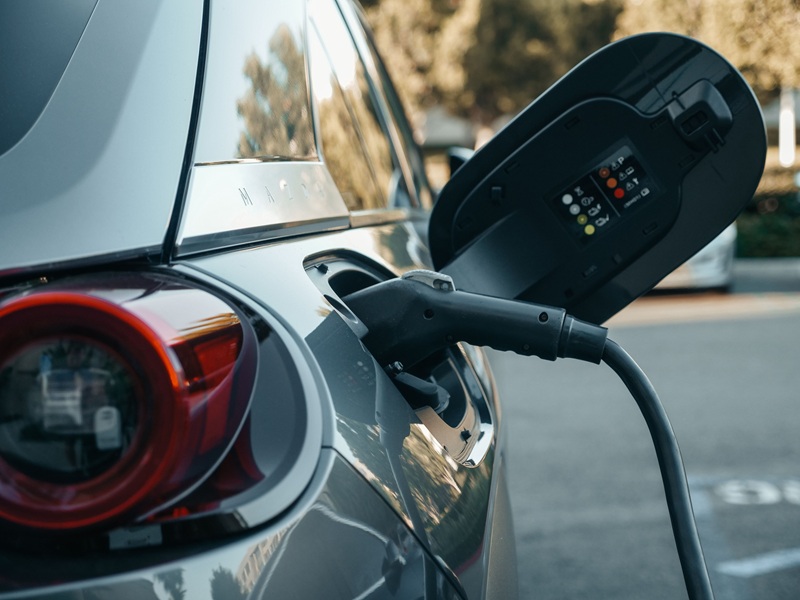
If you’ve just brought home your first EV, chances are the first thing you did was plug it into the nearest powerpoint, the same one you’d use for a kettle or a lawnmower, and wait to see what happened. It works. That’s the good news. The less good news is that a standard powerpoint and a purpose-built wall charger are not remotely the same experience, and understanding the gap between them will save you a lot of guesswork, and possibly a tripped circuit, in your first few months of ownership. Plenty of new owners only discover the difference after a conversation with an electrician about professional EV charger installation, by which point they’ve usually already lived through a few overnight charges that finished nowhere near full.
What charging from a standard powerpoint actually involves
A regular household powerpoint in Australia runs at 230V and is typically limited to 10 amps, which works out to around 2.3kW of power. Every EV sold here comes with a portable charging cable that lets you plug straight into that outlet, and for a lot of people that’s genuinely appealing. There’s no booking, no installation, nothing to schedule. You get home, you plug in, you go to bed.
The catch is speed, or the lack of it. At 2.3kW, a mid-size EV battery of around 60kWh will take somewhere in the vicinity of 24 to 26 hours to go from empty to full. In practice nobody drains their battery completely every day, so if you’re only topping up 15 or 20km of driving each evening, a powerpoint might genuinely be enough. But if you’re commuting further, running errands across town, or you simply forget to plug in one night, that slow trickle stops feeling convenient and starts feeling like a limitation you’re working around rather than a charging setup you can rely on.
There’s also a wear factor worth mentioning. Household circuits and their powerpoints aren’t designed to sit at close to their maximum load for ten or twelve hours every single night. It’s not necessarily dangerous on a well-maintained circuit, but it’s a very different pattern of use to plugging in a toaster for four minutes, and it’s why most electricians will at least raise an eyebrow if you tell them that’s your long-term plan.
What changes with a dedicated wall charger
A wall charger, sometimes called an EV charging unit or a home charging station, is a fixed piece of equipment installed on its own dedicated circuit, wired specifically for the load an EV draws. In Australia these units generally deliver either single-phase power up to 7.4kW or, in homes with a three-phase supply, up to 22kW.
The difference in charging time is substantial rather than incremental. That same 60kWh battery that took a full day on a powerpoint would take roughly eight hours on a 7.4kW single-phase unit, comfortably an overnight charge with room to spare. Step up to a three-phase 22kW unit and you’re looking at under three hours, which starts to resemble topping up a phone rather than refuelling a car. Not every home has three-phase power reaching the garage, so single-phase 7.4kW is the more common setup for most households, and it’s already a dramatic improvement over relying on a powerpoint.
Because the circuit is built for the job, there’s also less strain on the rest of your home’s wiring. The unit is designed to communicate with the vehicle, manage load sensibly, and in many cases can be scheduled to run during off-peak electricity periods, which matters more than people expect once they see their first full quarterly bill after buying an EV.
Weighing up cost, convenience and how you actually drive
None of this means a powerpoint is a bad choice for everyone. If you drive short distances, charge often, and don’t mind the occasional slow morning, it can genuinely cover your needs without spending a cent on new hardware. It’s also a sensible stopgap in the weeks after buying an EV, while you work out your actual charging habits before committing to anything.
But for most households, the calculation shifts pretty quickly once real driving patterns come into play. Higher weekly kilometres, multiple drivers sharing one car, or simply wanting the flexibility to plug in at 9pm and leave for a road trip at 7am, these are the situations where a dedicated charger stops being a nice-to-have and starts being the more sensible long-term investment. It’s worth remembering that the up-front cost of a wall charger is a one-off, while the extra time and inconvenience of relying on a powerpoint adds up quietly, week after week, for as long as you own the car.
The right answer really does depend on your circumstances, so it’s worth having an honest look at your driving distance, your existing switchboard capacity, and whether three-phase power is even available at your address before deciding either way.
Making the right call for your home
There’s no universally correct answer here, and that’s fine. A powerpoint might suit a low-mileage second car perfectly well, while a household with one EV doing the daily heavy lifting will usually get far more out of a dedicated charger. What matters is making the decision with your eyes open rather than by accident, because the two options really do behave quite differently once you look past the fact that both technically “charge the car.” If you’re weighing it up for your own home, a licensed electrician can walk you through what your switchboard can handle and what a sensible upgrade path looks like, so you’re not stuck guessing at 11pm with 20 percent left on the battery and an early start ahead of you.