The Warning Signs You Should Never Ignore Around Your Home’s Wiring
Australia’s mix of heritage homes and renovated properties means plenty of houses are still running on wiring that’s decades older than the appliances plugged into it. Around places like Prospect Hill Road and the streets near Our Lady of Victories Basilica, older electrical systems sit quietly behind freshly renovated kitchens and extensions, often untouched since the house was first wired. Most of the time, this goes unnoticed. The trouble starts when small warning signs get dismissed as quirks rather than treated as what they actually are.
Flickering lights are usually the first sign people notice, and also the one most commonly brushed off. A light that dims when the kettle switches on, or flickers briefly for no obvious reason, often points to a loose connection or a circuit under more strain than it was built for. On its own, it might seem harmless. Left unchecked, it’s the kind of thing trusted electrical contractors in Camberwell and other areas get called out for once it’s escalated into something considerably more serious, like a scorched power point or a tripped circuit that won’t reset.
Watch Out for a Burning Smell, As It Is Never Just Dust
There’s a difference between the smell of dust burning off a heater when it’s first switched on for the season, and the acrid smell of an electrical fault. If a burning smell lingers, comes from a power point or switch rather than an appliance, or keeps returning after the initial dust has cleared, it’s worth treating seriously.
Overheating wiring or a failing connection behind a wall doesn’t always show visible signs before something goes wrong, which makes the smell one of the few early indicators available.
Warm Switches and Power Points Should Never Be Ignored
A switch or power point that feels warm to the touch is telling you something is wrong, even if nothing visible has changed yet. Excess heat usually means a connection isn’t sound, or that too much current is running through wiring that wasn’t designed for the load.
This is particularly common in older homes where a power point originally meant for a lamp is now running a heater, a phone charger, and a set of speakers simultaneously. The fix is rarely as simple as switching things around; it usually points to a broader capacity issue worth having checked properly.
Frequent Tripping Is Not Just an Inconvenience
Safety switches and circuit breakers exist to trip when something’s wrong, but a circuit that trips repeatedly, especially without an obvious cause like a faulty appliance, is flagging a deeper problem.
It might be a wiring fault, a degraded connection, or a circuit that’s simply overloaded for what’s running on it day to day. Treating this as background noise, resetting the switch and moving on each time, tends to delay a fix rather than avoid the need for one altogether.
Buzzing Sounds Deserve More Attention Than They Get
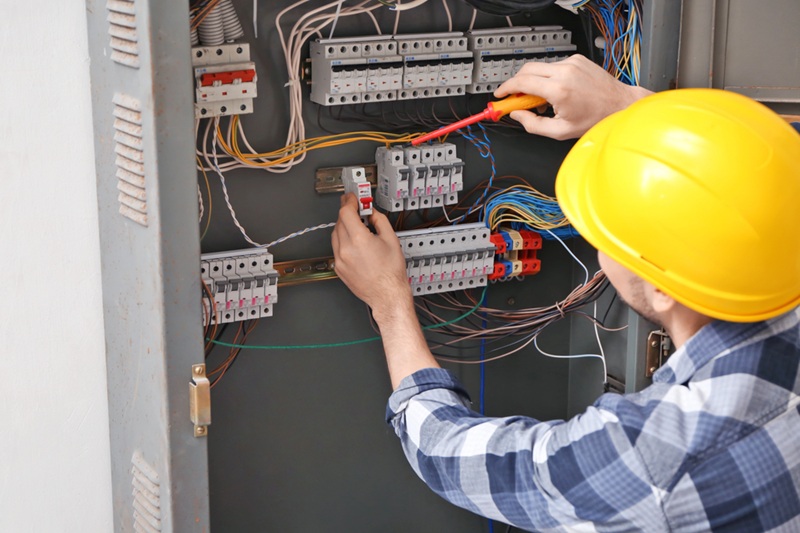
Electrical systems should be silent. A faint buzzing or crackling sound coming from a switchboard, power point, or light fitting usually means a loose connection is arcing, which generates heat and, over time, becomes a genuine fire risk.
This sound is easy to miss in a busy household, but it’s one of the more reliable indicators that something needs attention sooner rather than later, particularly in a switchboard that hasn’t been inspected in years.
Old Wiring Does Not Announce Its Age
Some warning signs aren’t about sound or smell at all; they’re about the age of the system itself. Homes built before the 1980s sometimes still carry original wiring insulation that degrades over time, becoming brittle and more prone to faults.
Safety switches, which are recommended to be tested at least every two years, offer some protection here, but they’re not a substitute for addressing wiring that’s simply reached the end of its practical life.
Learn to Recognise and Trust the Small Signs
None of these warning signs need to be dramatic to matter. A flicker, a smell, a slightly warm switch; these are the quiet signals that something in the system needs a proper look, well before they turn into an outage, a scorch mark, or worse. Paying attention to them early, rather than waiting for something more obvious to force the issue, remains the simplest way to keep an older home’s electrical system safe as it continues to age.