How to Fit a Swing Set and a Steel Shed in the Same Backyard
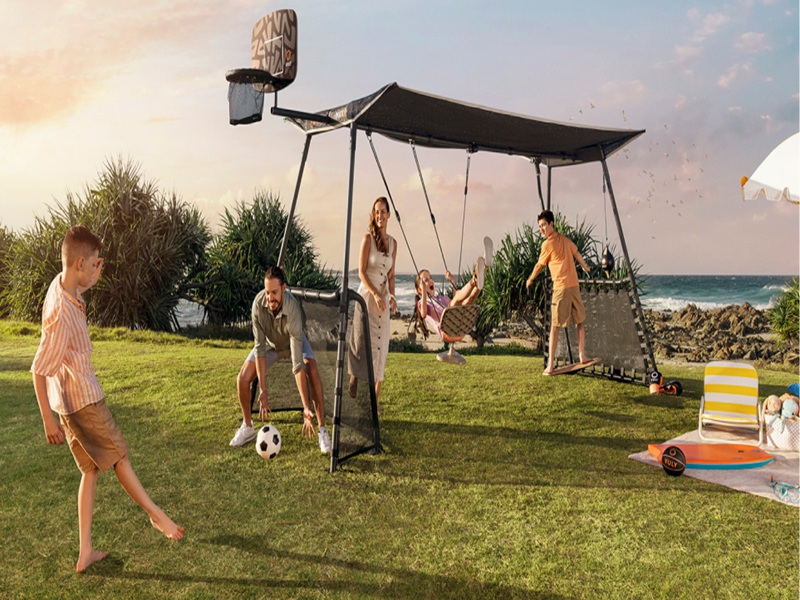
A swing set and a steel shed both want the flat, open part of the yard. On most Australian blocks, and especially on the smaller lots in newer estates, there’s only one of those. Put the shed in first and the swings get the leftover strip, which is usually too narrow and too close to a concrete edge. Plan the two together and both fit.
Choose the swing set before you pour the shed slab
The swing zone is bigger than most people expect. Allow about 2 m clear at each end of the frame. In front of and behind the seats, allow at least twice the height of the top beam. On a set with a 2.2 m beam that’s roughly 4.4 m each way, so the whole zone can run past 10 m front to back.
If you’re comparing steel frames that take add-on modules, the builder on the Vuly Swingsets page shows the footprint of each combination, which is the measurement you need here. Peg out that footprint plus the clearances, then decide where the shed goes.
Once the slab is poured, the shed stays put and the swing set has to fit around it. Check your council’s rules at the same time. In most states a small garden shed doesn’t need approval if it stays under a set floor area and height and sits far enough from the boundary, but the limits change from state to state.
Plan for the set you’ll have in a few years
Modular frames get longer. A two-seat frame bought for a toddler might gain a slide or a nest swing by the time the kids start school, and each extra bay adds length at one end. Peg out that bigger version. If the shed sits hard against the end of the frame, there’s nowhere to add a bay.
Run string lines between the pegs and leave them up for a week. Hang the washing and wheel the bins out to the gate while they’re there. You’ll find out fast whether the Hills Hoist and side gate still work.
Keeping shed doors and paths out of the swing zone
Nobody should walk in front of or behind a moving swing, including whoever is on the whipper snipper.
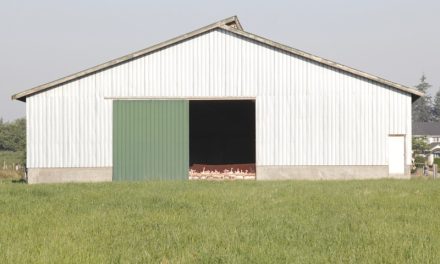
Face the shed door away from the swings, or side-on to them. A roller door facing the swing set means every trip for the mower crosses the run-out area. A hinged door is worse. Left open, it can swing into the zone itself.
Kids take the shortest line between two points and don’t look sideways while they do it. If the path from the back door to the shed cuts behind the swing set, someone will walk behind a moving seat sooner or later. Route it around the end of the frame instead, where the seats don’t travel.
Keep the shed’s corners and slab edge outside the clear area too. A Colorbond wall in full summer sun also gets too hot to touch, which is one more reason to keep it away from small hands on the swings. A child who lets go at the top of the arc can land well beyond the frame.
Use the shed for shade
The sun sits to the north here, so the south side of a shed is the shady side. Shade only helps if the swings go there. The east side gets afternoon shade, which is when most kids are home from school. Either spot keeps seats and soft-fall cooler in January, though kids still need a hat and sunscreen on the swings. Check the area still gets some winter sun, or the ground stays damp from May to September.
Soft-fall ground cover and drainage near the shed
Grass under each seat wears to bare dirt within a season. Most families cover the whole swing zone with loose bark mulch or rubber soft-fall.
Bark is cheap and easy to top up. Kidsafe recommends loose fill at least 300 mm deep. It gets kicked out from under the seats, so plan on raking it back every few weeks. Rubber tiles or wet-pour cost more up front and stay where you put them. Ask the supplier for a thickness rated to your set’s fall height, which on a swing is the seat height at the top of its arc. Whichever you choose, cover the full run-out area in front of and behind the seats, not only the ground under the frame. Australian Standard AS 4422 covers playground surfacing. A backyard set isn’t bound by it, but surfacing suppliers quote against it.
Put an H4 treated pine or plastic edge between the soft-fall and any concrete path to the shed. Bark on concrete is slippery underfoot.
Then look at the downpipes. A 3 x 3 m shed roof collects about 900 litres in a 100 mm storm. If the downpipe empties near the swing zone, bark turns into a soggy mat and rubber tiles lift at the edges. Connect it to stormwater or a tank, or put the shed on the downhill side so runoff flows away from the play area.
Storing detachable swings in the shed
Most swing seats unclip from the frame. Out of the sun and rain over winter, the plastic and ropes last longer.
Bolt a couple of hooks to a wall girt near the door and hang the seats off the floor. Steel sheds sweat on cold mornings, and ropes left on a damp slab grow mould. Keep them away from the mower and fuel tins too, or they come out smelling of two-stroke.
Redbacks like the dark underside of a stored seat, so give each one a shake and a look before it goes back on the frame. Check the clips and ropes for fraying before you rehang them in spring.