Shed Plumbing: Two Things That Get Missed Before You Backfill the Trench
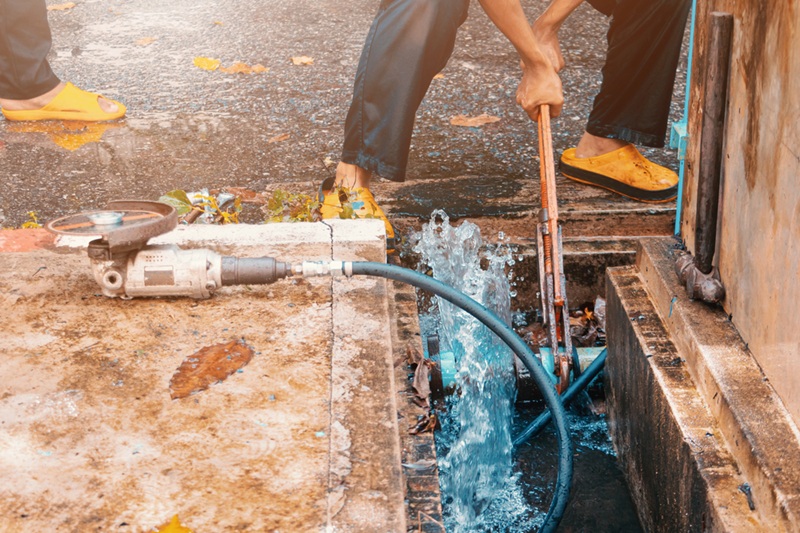
Plenty of shed owners get the hard part right and then come unstuck on the easy part. The council approvals are sorted, the trench is dug to depth, the pipe is in. Six months later there is a smell near the shed door, or a slow gully, or a council notice about a tap that should have had a backflow device on it.
We covered the groundwork in our guide to adding plumbing fixtures to your work shed – zoning, planning, trench depth and whether the whole exercise is worth it. This is the bit that comes after.
Two things that rarely make the planning list and cause most of the callbacks: getting the fall right, and backflow prevention.
Know which parts you can do yourself
Before either of those, it is worth being clear about where the line sits, because it changes how you plan the job.
Planning the run, working out the levels, digging the trench and deciding where the fixtures go is all yours if you want it. Connecting to the water supply and to the sewer is not. In New South Wales that work is notifiable, it has to be done by a licensed plumber, and a Certificate of Compliance has to be lodged when it is finished.
The NSW Government’s guidance for plumbers and drainers sets out which work falls into that category.
That certificate matters more than it looks. It is what a buyer’s conveyancer asks for when the property eventually sells, and unapproved plumbing work discovered at that point turns into an expensive problem at the worst possible moment.
So the practical approach for most people is to do the groundwork and have a licensed Sydney plumber handle the connections and the paperwork. Ask for the licence number before the work starts and the certificate afterwards. Anyone set up properly hands both over without being chased.
With that settled, here are the two things that go wrong.
Fall is not optional, and it is not a rule of thumb
Waste water moves because the pipe is on an angle. Nothing else pushes it. If a drain runs flat, or close to flat, solids settle where the water slows down and stay there until something blocks.
In Australia the minimum grade for a DN100 sanitary drain, the size most commonly used for waste, is 1 in 60. That works out at about 16.7 millimetres of fall for every metre of pipe. On a 12 metre run from a shed back to the main line, that is roughly 200 millimetres of drop between one end and the other.
That number is not a suggestion. It is set out in AS/NZS 3500.2, the standard that governs sanitary plumbing and drainage across the country, and it exists because there is a speed at which water carries solids along with it. Plumbers call it self-cleansing velocity. Too slow and the pipe silts up.
Smaller pipe needs more fall, not less. DN40 to DN65, the sizes you would use for a sink or a basin, need 1 in 40, which is 25 millimetres per metre.
Too much fall causes the same problem
This one surprises people. It seems obvious that steeper is safer, and it is not.
When a drain is too steep the water runs away faster than the solids it is meant to be carrying. The liquid arrives at the other end and the solid material is left sitting in the pipe. You end up with exactly the blockage you were trying to avoid, and it takes longer to show up, so the cause is harder to work out.
A shed sitting well below the house on a sloping block is the usual culprit. If the natural fall is far more than the pipe needs, the answer is not to just lay the pipe down the slope. It is to hold the grade where it should be and take the drop in a controlled way.
Work it out before the trench goes in
The arithmetic is simple and it is much cheaper to do standing up than kneeling in a trench.
Measure the horizontal distance from the shed connection to the point where you are joining. Multiply by 16.7 millimetres for DN100. That is your minimum drop. Then check you actually have that much height to play with between the two ends, because on a flat block you often do not, and that changes the job significantly.
A string line and a spirit level will get you close enough to know whether the plan works. Run the line between the two points, level it, then measure down from the line at each end. If the difference is less than your minimum, the pipe cannot fall the way it needs to and you need a different approach.
Finding that out before the trench is open is the whole point.
Backflow: the risk nobody plans for
Backflow is water travelling the wrong way, from your property back into the drinking water supply. It happens when pressure in the mains drops, usually because of a burst somewhere or work on the network, and water gets siphoned back up the line.
Shed taps are one of the classic risks, for a very ordinary reason. A garden hose left sitting in a trough, a drum, a pool, or a bucket of something you have been mixing is a direct path from that liquid into the pipework. Drop the mains pressure at the wrong moment and it can be drawn back.
This is why hose taps get treated as a hazard even though they look like the most harmless fitting on the property. It is not the tap, it is what the hose is sitting in.
What is actually required
Backflow prevention in Australia sits under the Plumbing Code and AS/NZS 3500.1, and the device you need depends on the level of risk.
Sydney Water’s backflow prevention guidance explains how the hazard rating works and what each level requires. For most shed and garden taps, the low hazard case, a point-of-use device does the job. A hose connection vacuum breaker or a dual check valve fitted at the tap. These are not expensive and they do not need annual testing.
Higher risk situations need a testable device, and those come with an obligation attached. Testable devices have to be inspected every twelve months by a licensed plumber with backflow accreditation, and the results are recorded. If your shed is going to have anything beyond a simple tap, that is worth knowing before you commit.
Your water authority can tell you which category your setup falls into. It is a short phone call and it settles the question.
The short version
Get the fall right, between 1 in 60 and something sensible, and check you have the height before you dig. Put a backflow device on the tap. Get the connections done by someone licensed and keep the certificate.
None of it is complicated. It is just the part that is invisible once the trench is backfilled, which is exactly why it is the part that gets skipped.