Do You Need Council Approval for a Mezzanine in Your Shed? What Australian Owners Need to Know
Yes, in most cases you do. Installing a mezzanine floor in Australia is classified as building work under the National Construction Code (NCC), which means a building permit, council approval, or both are required before you build.
What that process looks like depends on your building classification, the size of the mezzanine, and the state you’re in.
What Counts as a Mezzanine Under Australian Building Regulations
A mezzanine is an intermediate floor level within the height of an existing room or building. Under the NCC, adding one is treated as a structural addition, not a fit-out item.
This applies whether the system is welded, bolted, or fully freestanding. Even modular steel mezzanines that don’t attach to the existing shell are still subject to building approval.
If you’re getting a purpose-built system designed, working with a supplier who understands NCC compliance from the start will make the permit process significantly smoother.
When Does a Mezzanine Floor Require a Building Permit?
A building permit is required when your mezzanine meets any of the following:
- The floor area exceeds the exempt development threshold (commonly 10 sqm, but this varies by state)
- The mezzanine will be occupied, not just used for passive storage
- The building is used for commercial or industrial purposes
- The new floor space pushes the building against its planning limits
Small residential mezzanines used only for storage may qualify as exempt in some councils, but this exception is narrow. Always confirm with your local council before assuming you’re in the clear.
How Building Classification Affects Your Council Approval
Class 10a Sheds
A private shed used for storage sits at the lighter end of the compliance scale. A small, storage-only mezzanine may qualify as exempt in certain jurisdictions, depending on local council rules.
Class 7 and Class 8 Buildings
Warehouses, factories, and workshops carry considerably more obligations. A mezzanine in these buildings will almost always require certified engineering drawings, a formal building permit, and a completion inspection before the space can be used.
Converted or Mixed-Use Sheds
If your shed operates as a home office, studio, or regular workspace, it may already sit outside Class 10a classification. In that case, NCC compliance requirements apply regardless of how small the mezzanine is.
Fire Safety and Egress Requirements for Any Mezzanine Level
Any mezzanine people will occupy must meet NCC fire safety and egress standards. The key requirements are:
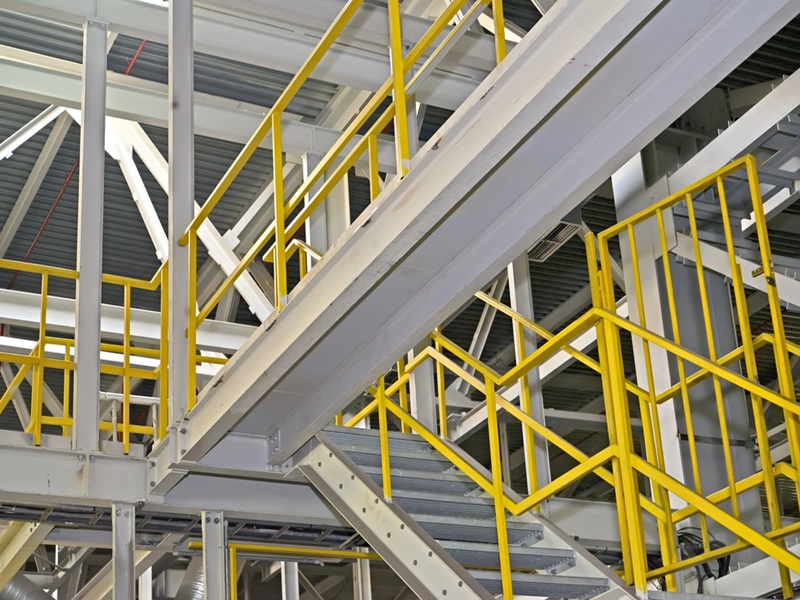
- Compliant stair access under AS 1657 (fixed platforms, walkways, and stairs)
- Clear and unobstructed evacuation paths from the mezzanine level
- Maximum allowable travel distance to a compliant exit
- Smoke detection coverage extended to the mezzanine area
In commercial and industrial buildings, existing sprinkler systems may also need to be extended to cover the new floor level.
State-by-State Differences in the Mezzanine Permit Process
The NCC sets the national standard, but each state runs its own permit system.
In Victoria, a registered building practitioner must submit the application through the Victorian Building Authority.
In New South Wales and Queensland, accredited private certifiers can issue approvals independently of council, which can speed things up.
In South Australia and Western Australia, council applications remain the standard route for most commercial mezzanine work.
Local planning rules can add an extra layer of requirements on top of the building permit, particularly on sites with floor space ratio controls or industrial zoning restrictions.
What Happens If You Skip the Approval Process
An unapproved mezzanine creates risks that tend to surface at the worst possible time:
- Building and contents insurance may be voided
- Council can issue a stop-work or demolition order
- Property sales can stall when buyers or lenders find unapproved work
- Personal liability applies if someone is injured on the structure
Retrospective approval is possible in most states, but it costs more, takes longer, and is not guaranteed.
Final Thoughts
The approval process for a mezzanine floor in Australia is straightforward once you know what applies to your site. Confirm your building classification, check both the planning and building permit requirements, and work with a supplier and certifier who understands the NCC from the outset.
That groundwork makes every stage, from design through to final inspection, considerably easier to manage.