Commercial Louvres Systems: Key to Compliance in Australia
Key Highlights
- Commercial louvre systems help Australian commercial buildings manage airflow, weather protection, and energy efficiency in one design element.
- Well-specified systems support Australian standards by addressing wind loads, water penetration, and project documentation needs.
- Aluminium options are popular because they are durable, low-maintenance, and suited to harsh environmental conditions.
- Fixed, adjustable, and architectural louvres each serve distinct commercial applications and building-envelope goals.
- Good louvre performance also improves ventilation efficiency, natural light control, and aesthetic appeal.
- Custom systems such as Elipso Louvres can be engineered for cyclone-rated and compliance-driven projects.
Introduction
If you are planning or specifying commercial louvre systems, compliance is usually the first concern. In Australian commercial buildings, louvre systems do far more than finish a façade. They support energy efficiency, airflow, weather control, and approval requirements. That makes the right system a practical building choice, not just a visual one.
Understanding Commercial Louvre Systems in Australian Buildings
Commercial louvres systems are engineered blade-based systems used in commercial buildings to control air, light, and exposure to environmental elements. They are built into the building design to support airflow, privacy, shading, or screening.
In Australia, commercial louvre systems‘ performance also links closely to compliance expectations shaped by the National Construction Code and the Australian Building Codes Board. That is why design, testing, and documentation matter from the start.
Role of Louvres in Building Design and Functionality
At a basic level, louvres help buildings breathe and adapt to external conditions. They admit natural light, reduce glare, and provide weather protection for exposed openings.
Louvres also offer architects design flexibility, as seen in projects across Australia where they have been used on windows, condenser decks, roofs, basements, and façade screens—demonstrating their versatility.
Importantly, louvres support energy efficiency by reducing reliance on mechanical HVAC systems and managing solar exposure and airflow. This makes them a key element in building performance strategies rather than just an add-on.
Distinguishing Commercial vs Residential Louvres
Commercial louvres are built to stricter standards than residential ones. Building type affects everything—from span and airflow to acoustics, privacy, and compliance.
In commercial projects, louvre design must meet wind loads, cyclone ratings, and approval requirements. Facilities like hospitals, offices, and schools cannot use light-duty solutions meant for homes.
This distinction is clear in practice: government buildings, hospitals, shopping centres, and schools require engineered systems with tested performance. Residential projects typically have simpler needs and fewer technical demands.
Types of Commercial Louvres and Typical Applications
There is no single louvre system that suits every site. Commercial applications vary widely, so projects often use different blade profiles, framing options, and screening styles depending on airflow, privacy, and façade intent.
Across Australia, architectural louvres appear in offices, retail centres, education buildings, medical facilities, and government work. The next sections break down the main types and where they fit best.
Fixed, Adjustable, and Architectural Louvres Explained
Fixed louvres deliver consistent airflow, screening, or weather protection with no moving parts. They suit roofs, basements, and external walls where reliability matters most.
Adjustable louvres allow flexible control—ideal for spaces needing variable sun or weather protection, especially in exposed locations.
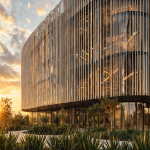
Architectural louvres blend performance and aesthetics. Aluminium is favoured in commercial settings for its durability and low maintenance.
| Type | Typical use | Key feature |
| Fixed louvres | Roofs, basements, plant areas | Steady airflow; easy maintenance |
| Adjustable louvres | Weather-exposed openings, shading | Control over air and light |
| Architectural louvres | Façades, feature screens, shopfronts | Style with function |
Common Use Cases in Offices, Schools, Hospitals, and Retail Spaces
Commercial louvres are widely used in Australian projects, each sector having distinct requirements. Offices may need condenser deck screening, while schools prioritise durable, low-maintenance ventilation.
Recent projects showcase their versatility:
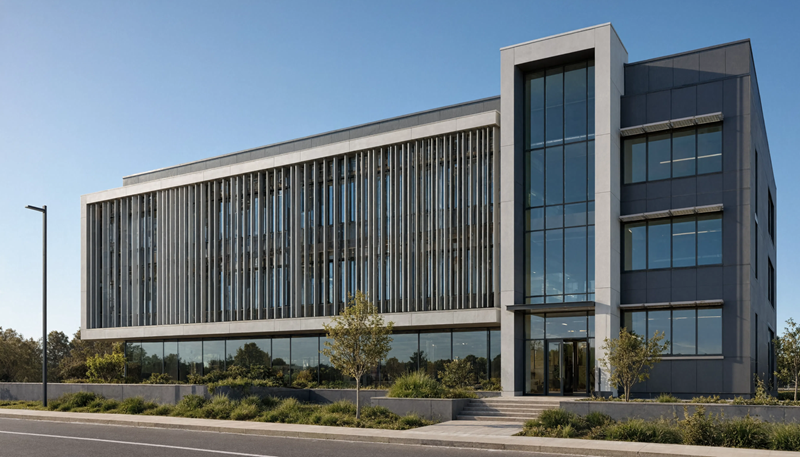
- Offices use aluminium louvres and sun blades for airflow and façade control.
- Schools fit sunshades, screens, and louvre blades to teaching blocks.
- Hospitals choose acoustic louvres for privacy and noise reduction.
- Retail spaces incorporate weather louvres and screens into building envelopes.
This adaptability makes louvres a key element in modern architecture.
Main Benefits of Commercial Aluminium Louvres for Outdoor Spaces
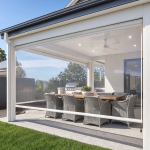
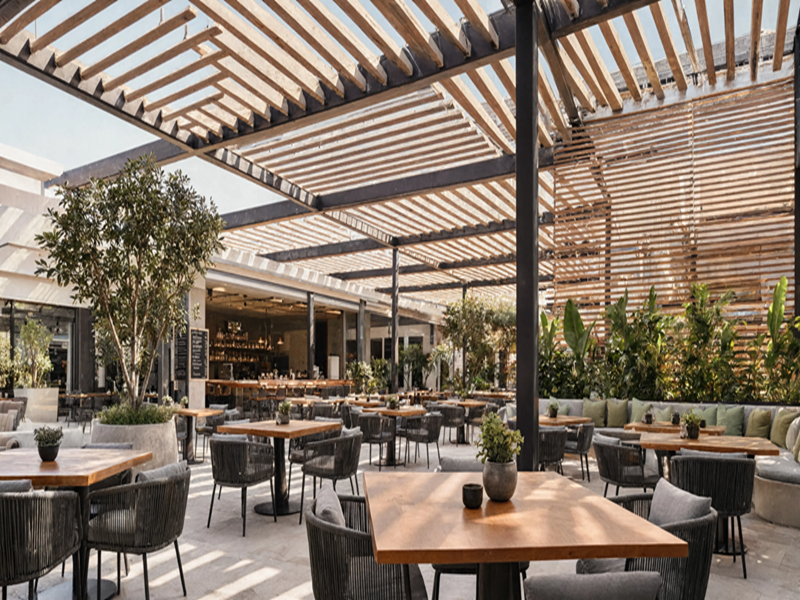
For outdoor areas like courtyards, alfresco dining zones, and pool decks, aluminium louvres are the practical choice. They handle sun and weather exposure well, keep maintenance low, and suit a wide range of outdoor commercial designs.
Material selection matters most in exposed conditions. Outdoor spaces face constant sun, rain, and temperature swings, and aluminium is widely used because it balances weather protection, durability, and design needs without adding unnecessary upkeep.
Weather Protection and Durability
Aluminium louvres shield outdoor spaces from harsh weather and stay durable over time, making them ideal for alfresco areas, pool surrounds, and open-air walkways.
Aluminium is corrosion-resistant and hard-wearing, standing up to UV exposure, wind-driven rain, and coastal conditions where relevant.
Enhancing Aesthetic Appeal and Property Value
Louvres don’t have to be purely functional; they can enhance visual appeal while providing shade or privacy in outdoor settings.
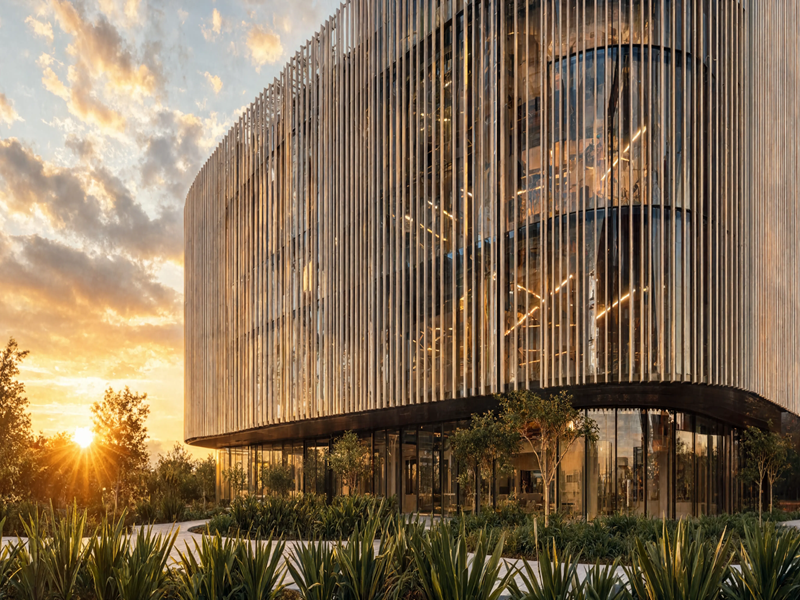
This matters for venue operators and property owners, as outdoor areas are often a key drawcard for hospitality and retail sites. Feature façades and vertical blades show how louvres can lift the look of a space while keeping it functional.
How Commercial Louvre Systems Ensure Solar Control and Energy Efficiency
Commercial louvre systems help manage solar control by filtering direct sun before it overheats interior spaces. That can make a big difference in buildings with broad façades or exposed windows.
The energy efficiency benefit comes from reducing strain on cooling systems. In simple terms, better sun control and airflow can lower reliance on constant mechanical support.
Sun Shading for Comfort and Reduced Cooling Costs
Sun shading works by reducing direct sunlight before it enters occupied areas. This cuts solar heat gain and helps protect occupant comfort in offices, classrooms, and retail settings.
In school buildings, external sunshades are commonly fitted to windows and upper levels to manage heat and glare in classrooms. That kind of approach helps maintain usable learning spaces without excessive glare or heat build-up.
For building operators, the pain point is cooling costs. When the façade reduces heat at the source, HVAC demand can ease, which supports better day-to-day energy control across the site.
Improving Natural Ventilation in Large Buildings
Louvres improve natural ventilation by allowing managed air movement through key openings in the building envelope. In large buildings, this can support more consistent airflow where sealed façades would trap heat.
This is especially useful in offices, schools, and plant areas. Instead of forcing every airflow need onto mechanical ventilation systems, louvres can help share the load in a simpler way.
The result is better ventilation efficiency without losing control of weather exposure. That balance is why airflow-focused systems are often specified early, not added at the last minute.
Meeting Australian Standards and Building Compliance Requirements
In Australia, compliance is one of the main reasons commercial louvre systems are engineered rather than chosen off the shelf. Building compliance depends on proving that the system meets performance requirements for the project.
That usually means aligning with Australian standards, the National Construction Code, and the documentation expected during approval and sign-off. The details below explain what that looks like in practice.
Relevant Codes and Regulations for Louvre Systems
Commercial louvres must comply with the National Construction Code and relevant Australian standards, tailored to the building and site conditions.
Key performance requirements include wind load, water penetration resistance, cyclone rating, and structural integrity—essential for projects in harsh or high-wind areas.
Approval also relies on paperwork: technical drawings, engineering specifications, and compliance documentation are vital for project sign-off. Builders and architects often require supplier input from the design stage.
Customisation and Compliance in Modern Projects
Yes, commercial louvre systems can be customised for different building designs, which is often necessary for compliance. Standard sizes rarely suit complex projects.
Customisation addresses specific needs such as airflow, acoustics, privacy, cyclone resistance, and façade design, ensuring both aesthetic and performance goals are met.
Elipso Louvres illustrate this with custom sizing, project-specific engineering, and technical support. For modern projects, customisation often makes compliance straightforward rather than challenging.
Conclusion
In summary, commercial louvre systems enhance building functionality and ensure compliance with Australian standards. They provide effective solar control, improve natural ventilation, and boost aesthetic appeal, increasing both performance and value. Understanding the types, applications, and regulations of louvres enables informed decisions that meet design and compliance requirements. When planning your project, consider how a well-designed louvre system can improve efficiency and comfort. For tailored advice on selecting the right solution, feel free to get in touch.