Why Your New Steel Shed Needs a Custom Drainage Plan
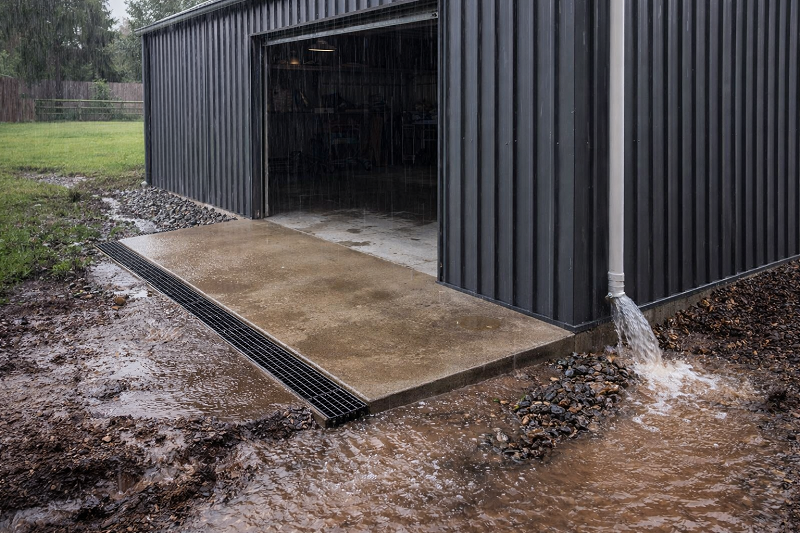
A new steel shed feels like a simple upgrade: pour a slab, bolt it down, move your gear in.
The surprise comes later, when the first heavy downpour turns the doorway into a stream, the slab edge stays wet for days, or the nearest gully starts burping after every storm.
Sheds change how water behaves on a block. They add roof catchment, hard surfaces, and new “barriers” that redirect runoff in ways your yard never had to deal with before.
A custom drainage plan isn’t about over-engineering—it’s about avoiding the kind of slow, annoying problems that become expensive once soil, concrete, and stormwater start arguing with each other.
What changes when you add a steel shed
A shed is a water-catcher and a water-diverter at the same time. Even a modest roof can dump a surprising volume into one spot if downpipes discharge at a single corner, especially when the ground is already saturated.
The slab and surrounding hardstand also create new runoff paths. Water that used to soak into the lawn now skims across concrete and compacted gravel, looking for the lowest point—which often ends up being the shed door, the roller-door track, or the junction between the slab and the surrounding soil.
The other shift is what you can’t see: the way water lingers around the slab edge. Persistent moisture at the perimeter can lead to muddy access, erosion, weeds, and (in some situations) slab edge movement or cracking over time, depending on soil type and how the area was prepared.
The problem with “She’ll Be Right” drainage
A lot of guys think they can just let the water run off the eaves and into the grass. In Sydney, with our clay-heavy soil, that’s a disaster waiting to happen.
The ground gets saturated, it swells up, and then it shrinks when it dries out. This “heave” is what cracks concrete slabs and makes your shed doors start sticking.
If you want the structure to actually last, you need to be smart about it. Connecting a few bits of flimsy pipe you found at the back of the yard isn’t a plan. You need a system that actually handles a proper storm.
This is where Apex Plumbing Services’ blocked drain specialist plumbers in Sydney come in. They don’t just throw pipes in the ground; they actually look at the “fall” and the capacity to make sure the water stays moving away from your investment.
The drainage plan that suits sheds
A good shed drainage plan is usually three small plans working together: roof water, surface water, and (sometimes) subsoil water. The best approach depends on how your site falls, what your soil does after rain, and how you’ll use the area.
Roof water: collect it, direct it, discharge it properly
Roof water is the easiest to control—if you make a decision early.
Start with gutters and downpipes sized sensibly for your roof area. Then decide where that water ends up. “Just let it run out onto the ground” can be fine for some blocks and terrible for others; the difference is slope, soil, and what sits downslope.
Common discharge options include:
- Directing downpipes to a suitable stormwater point (if available and appropriate)
- Using a rainwater tank (and making sure overflow is managed, not dumped at the slab edge)
- Running to a properly designed soakage solution where conditions allow
The key is to avoid concentrating roof water right beside the slab, especially at corners. Corners cop the most flow, and they’re where erosion and subsidence-style issues start looking “mysterious” later.
Surface water: shape the ground so water has an easy exit
Surface drainage is mostly geometry. If water has a clear, gentle path away from the shed, it’s less likely to pool, backflow, or pressure its way into the building.
Practical surface measures often include:
- Ensuring the surrounding ground falls away from the slab
- Creating a shallow “spoon drain” or swale to intercept runoff before it reaches the shed
- Installing a trench drain across doorways where vehicles or foot traffic make grading difficult
Trench drains are useful, but they’re not magic. They need fall, clear outlets, and regular maintenance—otherwise they become a long plastic trough that fills with silt and leaves.
Subsoil: only when the site actually needs it
Subsoil drainage is for water moving through the ground, not just across it. You’ll see signs you might need it when:
- The area stays boggy long after rain
- You have clay soils that hold water near the surface
- Water appears at the slab edge even when roof water is controlled
It’s also common on cut-and-fill sites where water gets trapped along the cut face, or where landscaping changes have created a “basin” around the shed.
Subsoil drainage can help, but it needs correct installation (including filtration and a proper discharge point). A pipe in the ground with nowhere to send water is just a pipe in the ground.
Common mistakes people make
The most common shed drainage mistake is treating it like a landscaping afterthought—grading gets handled “later”, once everything is built and access is harder.
The next mistake is focusing on one part of the system (like a trench drain at the door) while ignoring where the water is coming from and where it’s going. A trench drain without an outlet is a bucket.
Downpipes dumping at slab corners is another classic. It looks neat on install day and becomes a constant wet patch by winter.
Connecting new drainage into “whatever pipe is there” can also backfire. If the existing line is already undersized, partially blocked, or poorly graded, your new shed simply becomes the thing that exposes the problem.
If you’re seeing slow drains or overflow anywhere near the new slab, it’s usually worth getting a proper diagnosis early. Typically, opting for the instant blocked drain repairs in Sydney can be the best backup solution.
Decision factors that shape the right approach
Every block has a “default” drainage behaviour. Your job is to work with it, not against it.
1. Site fall and where water naturally wants to go
If the shed sits near a low point, you’ll need interception and a reliable discharge path. If the site already sheds water well, you may only need modest grading and roof water control.
2. Soil type and how quickly it drains
Sandy soils can handle soakage better than reactive clays. Clay can work with surface diversion and careful outlet design, but it punishes concentrated discharge at slab edges.
3. Shed use and traffic
A workshop with frequent vehicle movement needs stable, dry access. That often pushes you toward trench drains, spoon drains, or better hardstand falls rather than relying on “it’ll soak in”.
4. Outlet reality
The best drainage plan is the one that actually has somewhere to send water. If you don’t have a reliable stormwater point, you may need a combination of storage (tanks), dispersion, and surface diversion.
5. Maintenance tolerance
Pits, grates, and trench drains need cleaning. If you’re unlikely to do it, choose simpler shapes (good falls, swales) that keep working when leaves show up.
Common questions we hear from Australian businesses
Q1) Do I always need a trench drain across the shed door?
Usually, no—good falls and surface shaping can solve most doorway water issues. A practical next step is to check whether the apron falls away from the slab and whether runoff has a clear route past the door line. In many Australian sites with mixed rainfall intensity, trench drains are most useful when vehicle access prevents you from grading the area properly.
Q2) Can I just let the downpipes drain onto gravel beside the slab?
It depends on your soil, slope, and how concentrated that discharge is. A next step is to observe the area after rain: if gravel migrates, the ground stays wet, or water tracks back to the slab edge, you’ll want a controlled discharge path. In a lot of Australian clay-heavy suburbs, dumping roof water at corners quickly creates persistent wet patches.
Q3) What’s the warning sign that the stormwater line can’t cope?
In most cases, gurgling, slow emptying pits, or overflow during heavy rain are red flags—especially after you’ve added new roof catchment. A next step is to stop adding new inlets until you confirm the outlet is clear and graded correctly. In Australian retrofit situations, older lines can be undersized or partially blocked, and new shed runoff is often what exposes it.
Q4) If my shed is on a slab, do I need subsoil drainage around it?
Usually, only if water is lingering near the slab edge long after rain or you’re dealing with known drainage-retentive conditions. A next step is to check whether roof water is being discharged away from the perimeter and whether surface falls are correct—those two changes often remove the “need” for subsoil drainage. On many Australian cut-and-fill blocks, subsoil drainage becomes relevant where water gets trapped against a cut face or a landscaped retaining area.