Shed Maintenance 101: Checking Your Seals, Screens, and Safety Glass
Sheds live a harder life than most rooms in the house. They bake in summer, chill overnight, and often sit a little “off-level” as the ground shifts.
That constant movement and temperature swing is exactly what turns small window issues into bigger ones: brittle seals, rattly frames, torn screens, and glass that’s suddenly a safety question instead of a cosmetic one.
If you use your shed as a workshop, home gym, studio, or even just storage, the windows matter more than you think about it.
They control dust and pests, they decide whether you get condensation, and they affect how secure the space feels when you’re not there. The good news is most problems announce themselves early—if you know what to look for.
Why shed windows fail faster than house windows
Shed windows sit at the intersection of movement, moisture, and neglect. Homes usually get steady airflow, regular cleaning, and faster repairs when something looks “off.” Sheds get slammed doors, leaning bikes, occasional hose-downs, and months between inspections.
This isn’t just a weather issue; it’s a massive safety risk. Old, brittle glass in a shed can shatter with the slightest impact, which is why window glass replacement experts are often the first “real” option people should choose.
Although there are three patterns that show up again and again:
- Thermal stress: Frames and panes expand and contract daily. Over time, that loosens fixings and fatigues old glass.
- Moisture cycling: Even dry sheds can trap humidity overnight, then dry out rapidly by midday. Seals hate this.
- Micro-impacts: Tools, ladders, timber, or a stray cricket ball don’t always break glass immediately—sometimes they leave chips that become cracks later.
A shed window doesn’t have to look “broken” to be on the way there. You’re looking for early warnings you can fix cheaply.
The 15-minute inspection that catches most problems
Do this with the door closed, then open. You’re checking how the shed behaves when it’s sealed versus ventilated.
- Look at the corners of the panes. Chips and tiny star-cracks often start there.
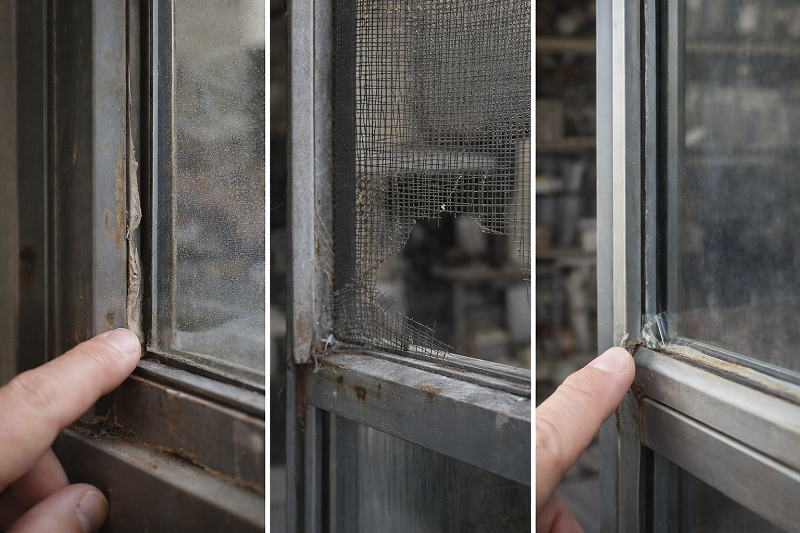
- Press lightly on the frame. If you get movement or rattling, the issue may be fixing points, warped timber, or degraded glazing beads.
- Run your hand around the interior edge. You’re feeling for cold drafts, dampness, or gritty dust trails.
- Check the sill line. Water marks, swelling timber, or powdery residue can mean leaks or long-term condensation.
- Test the screen tension. If it bows easily, is torn, or sits loose in the channel, pests will find the gap.
- Open/close the window slowly. Grinding, sticking, or a “catch” tells you alignment or hardware issues are developing.
This routine is simple, but it’s the difference between resealing a small gap and replacing a pane after the next windy weekend.
Seals: what to look for (and what’s normal)
Not every gap is a crisis. Sheds aren’t airtight, and some airflow is actually helpful for reducing mould and tool corrosion. The goal is to control unwanted airflow—drafts that bring dust, moisture, and insects through the window assembly.
Common seal failures:
- Cracked or brittle silicone along the perimeter
- Shrinkage where sealant pulls away from one surface
- “Mushrooming” where sealant is lifting and catching dust
- Water tracking that starts above the window and ends on the sill
A practical test: on a breezy day, hold a strip of tissue near the frame edges. If it flutters strongly at one point, you’ve found a focused leak worth addressing.
One mistake people make is smearing fresh sealant over old, dirty silicone. It looks fixed for a week, then peels. If you’re resealing, surface prep matters more than the brand of sealant.
Screens and ventilation: keep airflow, lose the pests
Screens get ignored in sheds because they feel optional—until you find a nest, a swarm, or a new “entry point” for spiders. Screens also quietly protect your window hardware by reducing wind-driven debris.
If you’re serious about protecting what’s inside, you need to look at security screen windows solutions. But, even the best screens need maintenance.
Think of screens as a system with three parts:
- Mesh integrity: tears, holes, and stretched areas
- Frame fit: corners that separate, warped sections, loose channels
- Closing pressure: windows that don’t close firmly let screens rattle and degrade faster
If your shed is dusty (woodworking, grinding, sanding), you may be tempted to seal everything tight and skip screens. That often backfires. A shed that can’t vent properly will trap humidity—leading to rust, mildew smells, and condensation on the inside of glass.
A balanced approach is: control where air comes in (screened openings), and keep unplanned gaps sealed. That way you get airflow without inviting pests through the “weakest” spot.
Safety glass: spot risks and decide “repair vs replace”
This is the section where it’s worth being a little conservative. In a shed, broken glass is more likely to happen during DIY work—moving sheets of material, carrying tools, or slamming a door in wind.
Start with what you can observe safely:
- Cracks that run, branch, or lengthen over time are not “stable.”
- Chips on edges or corners are often the starting point for a full crack.
- A pane that rattles can indicate it’s no longer held correctly, even if it looks intact.
- Moisture trapped between layers (where relevant) or persistent fogging suggests the assembly is compromised.
If you’re at the point where replacement is the sensible call, Intrinsic Glass can help you understand what typically happens next before you book a site visit.
Operator Experience Moment: I’ve seen shed windows that “looked fine” from a distance but made a faint clicking sound when the door shut.
That tiny movement was enough to turn an old corner chip into a long crack over a few windy days. The biggest lesson was that sound and movement are often earlier warning signs than appearance.
When in doubt, don’t test glass by pushing on it. Assess the frame stability first, then decide whether the pane needs professional assessment—especially if the shed is used frequently or kids are around.
Common mistakes that turn small issues into expensive ones
Most shed window problems worsen because of timing and shortcuts, not because they’re inherently complicated.
Mistake 1: Resealing without cleaning.
New sealant won’t bond well to old, dusty silicone or damp timber. It peels, and the leak returns.
Mistake 2: Treating condensation like a “window problem” only.
Condensation is often a ventilation and storage layout issue too. Wet items, poor airflow, and temperature swings all contribute.
Mistake 3: Ignoring frame movement.
You can replace a pane perfectly, but if the frame is twisting due to settling or loose fixings, the new pane may be under stress again.
Mistake 4: Over-tightening hardware.
People try to “fix” rattles by cranking screws down. That can warp frames or crack older materials.
Mistake 5: Waiting for a full break.
A small crack is still a window problem. A shattered pane is also a cleanup-and-safety problem—usually at the worst possible time.
Common questions we get from Aussie business owners
Q1) My shed window fogs up inside—should I replace the glass?
In most cases… fogging is a ventilation and moisture-cycle issue before it’s a glass issue. As a next step, try improving controlled airflow (screened openings) and keep wet items off the floor and away from walls; in many Australian sheds, overnight temperature drops make condensation show up even when it “feels dry” during the day.
Q2) Is a small corner chip something I can ignore?
Usually… a corner chip is worth monitoring closely because it’s a common starting point for a longer crack. Next step: take a clear photo and mark the chip location so you can tell if it’s growing; in Australia, windy days and door slams can add the kind of vibration that turns “tiny” into “sudden.”
Q3) I resealed last year and it’s peeling already—what went wrong?
It depends… The most common cause is sealing over old silicone, dust, or damp surfaces. Next step: clean back to a sound surface and let it fully dry before resealing; in many Aussie backyards, fine dust and afternoon heat make surface prep more important than people expect.
Q4) When is it better to call a professional instead of DIY?
In most cases… If the pane is cracked, rattling, hard to access safely, or the frame is moving, a professional assessment is the lower-risk option. Next step: document what you’re seeing (photos, where the draft is, when the rattle happens); Australian sheds often sit on shifting ground, so a pro can help separate “glass problem” from “structure problem.”