Garden Shed Instead of a Home Extension – How the Pandemic Sparked a Trend for Games Rooms in the Garden
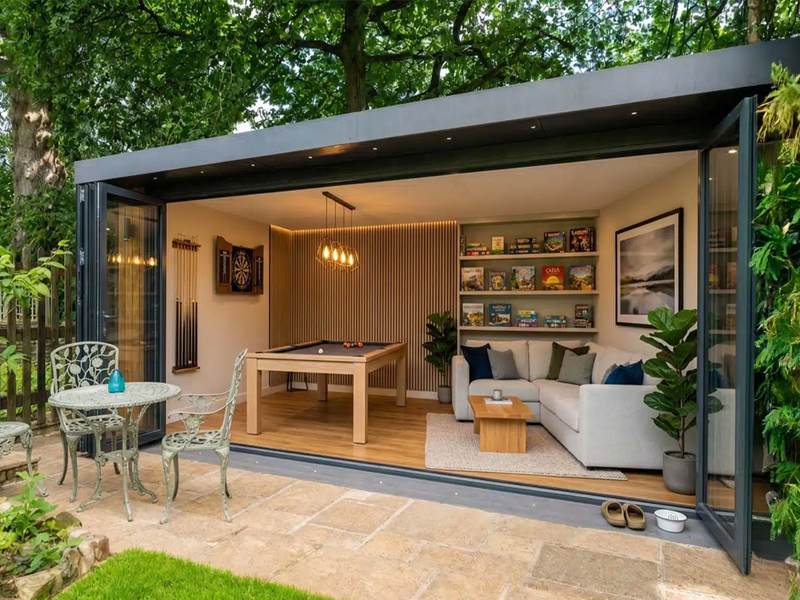
During the COVID-19 pandemic, the “games room shed” concept evolved from a niche hobby into a notable trend. Companies specialising in garden buildings reported a sharp rise in enquiries about converting ordinary garden sheds into fully equipped leisure and entertainment spaces. The reason is straightforward: people confined to their homes were looking for ways to expand their living space without the expense and disruption of a home extension.
The idea appeals to a wide range of homeowners. Some simply lack the indoor space for a pool table or games console, others dream of a dedicated area for socialising with friends, and some just want to unwind after work without leaving their own property. With the right preparation, such a room can be used year-round, and it can be created far more quickly than a traditional home extension.
Without electricity, internet and proper locks, it’s not worth starting
Before ordering a sofa and a television, three infrastructure issues need to be resolved. The first and most obvious is electricity — without it, nothing works, from a games console to a mini fridge. The second is a reliable Wi-Fi connection. A garden building is typically situated at the far end of a plot, and the home signal often fails to reach it. Options for improving connectivity include a Wi-Fi repeater, a powerline adapter, or running an Ethernet cable.
The third, and perhaps most underestimated, consideration is security. A shed filled with expensive electronics becomes an obvious target for thieves. Sturdy locks, a burglar alarm, and curtains or blinds that conceal the contents all shift from optional extras to an essential layer of security.
Why a small shed won’t do
Compact pent or apex models — those with a single-pitch or small double-pitch roof — are generally too cramped for a proper games room. A pool table, a sofa, and a couple of armchairs simply won’t fit, and narrow walkways will make the space uncomfortable to use.
More practical options, based on real-world experience, include:
- A summer house with adequate ceiling height and a floor area of at least 10 m².
- A garden office: designed from the outset for extended use, and often already insulated.
- A spacious utility shed in which a leisure zone and space for equipment can be comfortably arranged.
Four steps to a finished games room
Choosing the building
At the outset, it is important to define how the space will be used. Console gaming, a home cinema, board games, pool — each scenario has its own requirements in terms of floor area. It is worth sketching out the dimensions of the furniture and equipment in advance, leaving enough room for comfortable movement. The position on the plot also matters: easy access and the ability to run power and internet cables without excessive cost are both worth considering early on.
Electricity and internet
Without a reliable power supply and internet connection, all the entertainment equipment becomes a useless collection of objects. At the planning stage, it is worth allowing for enough sockets to serve a television, games console, fridge, and lighting. For internet access, the sensible approach is to measure the strength of the home Wi-Fi signal at the intended location of the building before deciding on the best method of extending it.
Security
A quality padlock, a burglar alarm (even a standalone one), and opaque curtains form the minimum set of measures to guard against unpleasant surprises. Specialists recommend thinking through basic security for any garden building, regardless of its intended use.
While the alarm is not yet installed and the lock has not yet been tested over time, there is no rush to buy an expensive games console and a large television. Many garden room owners start small: spending a few evenings there with a laptop or smartphone, while also checking how secure the building is and how well the Wi-Fi signal holds up. For that period, simple games are more than enough — especially since digital storefronts regularly offer free games and giveaways. As the team behind nodepositbonusesau.com explained, tracking promotions across more than ten platforms, there are currently plenty of free games along with sign-up bonuses and loyalty bonuses available. Many of them can even be launched on a phone. So there is no need to be bored in the shed: time there can be spent enjoyably and without expensive gadgets, while security arrangements are being finalised. Once the protection is in place, it is time to move on to full-scale fitting out.
Fitting out and dividing into zones
It is the contents that transform a shed into a proper games room. The space works well when divided into zones: active games, film watching, and socialising. A typical list of equipment that appears most often in projects of this kind includes:
- Pool table
- Games console and television
- Sofa or armchairs
- Dartboard
- Posters and décor to set the atmosphere
- Mini fridge for drinks
- Arcade machines (for those who want the full immersive experience)
From an empty space to a finished result
A working garden games room comes down to tackling four tasks in sequence: choosing a building of the right size, installing electricity and internet, ensuring security, and then filling the space with equipment and furniture. Solid Sheds offers a range of timber garden buildings well suited to the “games room shed” format. Models can be browsed on the website, and a consultation is available by calling 01695 51442 or using the online enquiry form.