The Smallest Styling Changes That Shift Buyer Perception
When buyers step into a property, their impressions form quickly. Studies in environmental psychology show that people evaluate comfort, value, and livability within moments of entering a space. Small visual details, furniture placement, lighting, and colour balance can subtly influence how large or functional a room appears. Because of this, effective property styling rarely depends on major renovations. Instead, small, carefully chosen adjustments often shape how buyers interpret the space.
Adjusting Furniture Scale and Placement
Furniture scale and positioning are among the most influential styling factors. When furniture is too large or poorly arranged, rooms often appear smaller than they actually are. Correct proportions help buyers understand the spatial hierarchy of a room and how it is intended to function.
Simple adjustments can quickly change perception. Moving a sofa slightly away from the wall, introducing slimmer seating, or replacing bulky tables with lighter alternatives can make a room feel more open. These changes also improve circulation, allowing buyers to move comfortably through the space.
Stylists frequently source appropriately sized pieces through specialist suppliers such as huntleyandco.com.au, allowing them to match furniture to the scale of the room rather than forcing existing pieces into unsuitable layouts. When furniture proportions align with room dimensions, spaces tend to feel more balanced and usable.
Improving Natural Light Perception
Lighting strongly affects how buyers judge a home. Even properties with good natural light can appear dim if styling choices block or absorb that light.
Minor changes often make a noticeable difference. Removing heavy curtains, repositioning mirrors, or replacing dark décor with lighter accents helps distribute light more evenly throughout the room. Mirrors are particularly effective because they reflect daylight and interior lighting, a principle known as light diffusion.
Brighter spaces tend to feel cleaner, larger, and more welcoming. These subtle improvements influence perception without requiring structural changes.
Introducing Neutral Visual Balance
Colour choices can significantly affect how buyers experience a room. Bold décor may reflect personal style, but it can make it harder for buyers to imagine the space as their own.
Small styling changes that introduce neutral tones help create visual balance. Cushions, rugs, or simple artwork in softer colours can reduce strong contrasts and make the room feel more cohesive.
This approach also lowers cognitive load, the mental effort required to process visual information. When a room feels visually calm, buyers can focus on the layout and potential of the property rather than on decorative distractions.
Creating Clear Focal Points
Rooms often feel incomplete when there is no clear visual anchor. Establishing a focal point helps guide the eye and gives buyers a clearer sense of how the space works. This is evidenced by research on visual attention in built environments, where eye-tracking studies show that people instinctively fixate on dominant elements to interpret spatial layout and function, using these visual cues to understand how a room should be experienced.
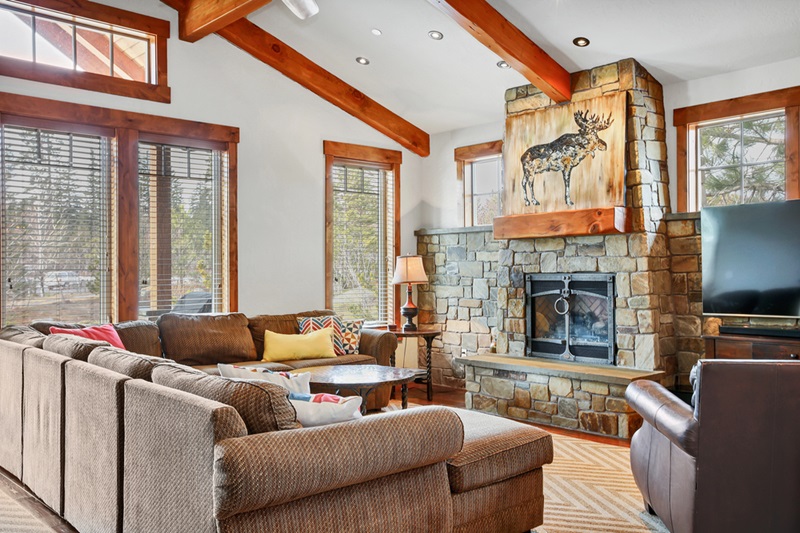
A sofa oriented towards a feature wall, artwork placed above a console, or a well-positioned lamp can create this visual structure. These small adjustments apply the design principle of visual hierarchy, where certain elements naturally attract attention first.
When buyers immediately recognise the purpose of a room, the space tends to feel more organised and functional.
Refining Decorative Proportions
Accessories influence presentation more than many sellers expect. Too many small decorative items can make a space feel cluttered even when it is tidy.
Styling often improves when décor is simplified and arranged with intentional spacing. Grouping objects in small clusters creates visual symmetry, which the eye finds easier to interpret.
Using fewer, slightly larger decorative pieces and leaving space between them can make surfaces appear more balanced. This subtle refinement helps rooms feel calmer and more organised.
Small Styling Decisions That Shape Buyer Impressions
Successful property styling often depends on subtle adjustments rather than dramatic changes. When furniture scale, lighting, colour balance, focal points, and decorative proportions are carefully considered, buyers tend to perceive the property as more spacious, functional, and inviting. These small decisions quietly shape how people experience the home, helping them imagine how the space could support their own daily lives.