Is Your Outdoor Hot Water System Ready for Winter? A Maintenance Checklist
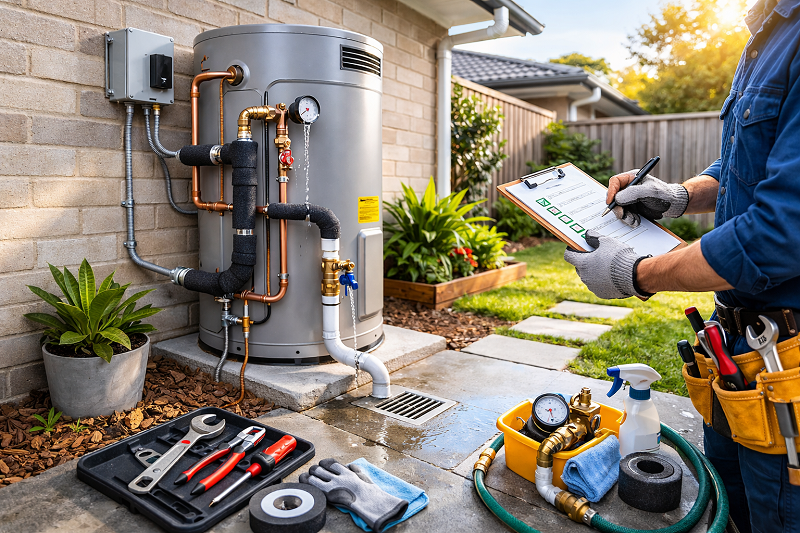
Outdoor hot water systems do a quiet job most of the year—until winter exposes every weak point. Colder inlet water, longer showers, and more heat loss from exposed pipework can turn “mostly fine” into “no hot water” at the worst time.
A winter readiness check doesn’t need to be technical to be effective. The goal is simple: spot early warning signs, reduce avoidable strain, and know when a licensed professional should step in.
Why winter is tougher on outdoor hot water systems
When the mains water temperature drops, your system has to work harder to lift water to the same shower temperature. That can mean longer heating cycles, higher energy use, and more wear on components that were already near their limit.
Outdoor installs also lose heat faster through exposed copper and fittings, and wind chill can make marginal insulation problems suddenly matter. If your unit is older, winter is often the season that “small issues” finally show up as outages.
If you manage a property, winter also tends to compress decision-making—tenants notice issues faster, and the cost of after-hours callouts can spike if the system fails unexpectedly.
Even if you’re noticing puddles around the base that don’t dry up, or if the unit is making a weird “rumbling” sound (that’s usually sediment boiling at the bottom), it’s time to call it.
It’s way cheaper to organise a hot water system replacement with the team at Sydney Hot Water Systems during working days.
A Quick “No-BS” Maintenance Checklist
You don’t need to be a pro to do a five-minute check. Just walk outside and look for these three things:
- The “Drip” Test: Look at the Temperature Pressure Relief (TPR) valve. It’s that little silver lever. Give it a tiny lift. Water should come out, and then it should stop completely when you let go. If it keeps dribbling, your valve is stuffed. If it stays bone dry, the valve is seized. Both mean your tank is under too much pressure.
- The Flame Color: If you’ve got a gas unit, peek through the little window at the pilot light or burner. You want a sharp blue flame. If it’s looking orange or yellow and flickery, the jets are clogged with gunk or dust. That’s a classic sign you need a reliable gas heater service to come and blow the lines out.
- The Insulation Wrap: Those copper pipes coming out of the unit get freezing. If they’re bare, you’re losing heat before the water even gets inside the house. Spend ten bucks at the hardware store on some foam lagging and wrap ’em up. It’s the easiest way to shave a bit off your gas bill.
The winter-readiness checklist you can do safely
1. Do a quick visual scan around the unit (2 minutes)
Look for obvious leaks, damp patches, or rust staining on or under the unit. Check the base and nearby ground; slow leaks often show up as persistent wet areas or mineral crusting.
Make sure the area around the unit is clear of stored items, leaves, and garden debris. Good airflow matters for many systems, and clutter can also hide small leaks until they become big ones.
2. Listen and sniff for “new” behaviour
Unusual ticking, banging, or rumbling during heating can signal scale or sediment buildup (common in older tanks). A persistent gas smell is not a “monitor it” situation—treat it as urgent and follow safety guidance (turn off gas if safe, ventilate, and contact a licensed professional).
If the unit is cycling on and off more than usual, note when it happens (e.g., only during showers, or even when no one is using hot water). That pattern helps a technician diagnose faster.
3. Check hot water temperature stability (without adjusting controls)
In winter, temperature swings become more noticeable. If you’re getting hot-cold-hot changes in the shower, it may be a flow/pressure issue, a tempering valve issue, a thermostat control issue, or a sign the unit is struggling with demand.
Also watch for “takes ages to get hot” behaviour that’s new this year. That can be normal with colder inlet water, but sudden changes can point to a system that’s losing efficiency.
4. Inspect visible pipework and insulation
Outdoor pipe insulation gets smashed by UV, pets, and weather. If insulation is missing or brittle, you’re effectively heating the air before the water reaches the house.
A practical check: run hot water for a minute, then carefully feel near (not on) the insulated sections. If you can feel significant heat radiating off uninsulated pipe in cold air, heat loss is likely part of your winter pain.
5. Look at the pressure relief discharge area (don’t touch valves)
Most systems have a relief valve and a discharge line that should direct water safely away. If you see constant dripping or pooling, that’s a sign to book an inspection—relief components can fail, and pressure issues can damage the system.
Avoid manually lifting or testing valves unless you’re trained and confident, because they can stick or leak afterward. Winter is not the time to create a new fault.
6. Pay attention to water appearance and smell
Rusty or discoloured hot water can indicate internal tank corrosion (for storage systems) or pipe issues. A sulphur “rotten egg” smell may be water chemistry related or a sign something is off; either way, it’s worth logging and raising during a service.
If the discolouration is only on hot water and persists beyond a quick flush, treat it as a diagnostic clue—not just an annoyance.
7. Check the “demand reality” of your household
Winter demand often changes: more baths, longer showers, more laundry. If the system was already sized tightly, it may run out faster or struggle to recover between uses.
A simple test is to note how long hot water lasts and how quickly it recovers on a typical winter evening. That observation becomes key when you’re deciding whether to repair, upgrade, or replace.
Common mistakes that turn small issues into winter failures
The most common trap is ignoring minor symptoms because the system “still works.” A small leak, intermittent ignition issue, or temperature fluctuation can be the early stage of a bigger component problem.
Another frequent mistake is overcorrecting by fiddling with settings. Turning temperatures up to “fix” lukewarm water can mask the underlying issue and, in some households, create scalding risk.
People also underestimate the impact of outdoor heat loss. Replacing insulation and protecting exposed pipework is often cheaper than repeated callouts—and it reduces the load on the system every single day.
Finally, DIY repairs that cross into licensed work can create safety hazards and complicate future servicing. The safest winter strategy is: observe, document, and call in qualified help when symptoms appear.
Common questions we hear from Australian businesses
How do we tell if a winter issue is “normal” or a sign of failure?
Usually, if the change is gradual and predictable (slightly longer heat-up time in colder weather), it can be seasonal. A practical next step is to track symptoms over a week—temperature swings, unusual noise, or repeated cycling—and share those notes during a licensed inspection. In many cases across Australia, winter demand patterns (longer showers, more laundry) make borderline systems feel worse quickly.
Should we service an outdoor hot water system before winter every year?
In most cases, an annual check is sensible if the unit is older, heavily used, or supports a rental property where downtime is costly. A practical next step is to schedule a standard service in early autumn so you’re not competing with emergency bookings in June–August. In Australian metro areas, winter weekends can become busy for trades, which can extend response times.
What are the clearest signs it’s time to replace rather than repair?
It depends on age, the frequency of faults, and whether the system still meets demand. A practical next step is to list repairs in the last 24 months and note any recurring issues (temperature instability, leaks, ignition problems), then ask a licensed technician what the next likely failure points are. In many Australian homes, once callouts become regular, replacement before peak winter can reduce disruption.
Can we improve winter performance without replacing the whole system?
Usually, yes—if the core system is healthy and correctly sized. A practical next step is to address obvious heat-loss issues first (damaged pipe insulation, exposure to wind) and confirm that temperature stability is acceptable during peak use. In most cases in Australia, outdoor installs benefit from basic protection and maintenance, but persistent instability should still be assessed by a licensed professional.