Shed Landscaping 101: How to Blend Your Steel Building into Your Garden
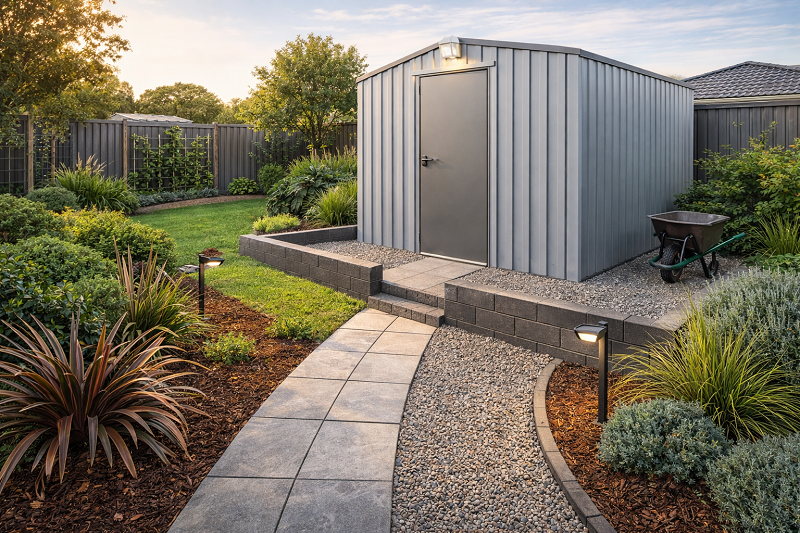
A steel shed can be the most useful “room” on the property—and the most visually awkward. It’s not that the building is wrong; it’s that the garden around it doesn’t yet explain why it’s there.
The fix isn’t fancy. It’s a handful of practical decisions about access, levels, water, and planting that make the shed feel like it belongs.
Start with function: access, drainage, and sightlines
Before you buy plants or lay edging, walk the route you’ll use most. Think about carrying tools, wheeling a mower, or moving bulky items in and out.
A shed that looks fine from the patio can still feel annoying if the path is muddy, narrow, or poorly lit.
Now look at the water. Steel sheds don’t mind rain, but the area around them does—especially door thresholds, gravel pads, and the spots where runoff will carve channels.
You can’t landscape over junk. It’s the fastest way to invite termites or end up with a drainage nightmare. Most people try to hide the rubbish behind the shed, but that’s just kicking the can down the road.
Getting professional rubbish removal services early is the best move you’ll make. Companies like A1 Gardening & Landscaping can clear that site properly, taking away the heavy soil and construction debris so you actually have a workable surface.
Finally, check sightlines from the places you actually stand: kitchen window, deck, clothesline, and the gate you enter through.
Make the shed feel “built-in” by using levels, not decorations
Most sheds look “dropped in” because the ground around them is unresolved—one side floats, the other side disappears, and the garden has no clear edges.
If your yard is even slightly sloped, levelling a small platform can instantly make the shed look intentional.
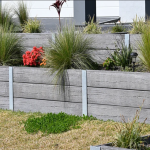
This is where retaining wall installation often becomes the practical step that ties everything together, because it lets you create a crisp transition between the shed pad and the rest of the garden.
If you’re weighing wall height, drainage needs, and finish options, A Bargain Gardener’s specialists for retaining wall installation is a helpful starting point to sanity-check what’s realistic for your yard.
Don’t aim for a “feature wall” first. Aim for a clean platform, stable soil, and a level working zone around the doors.
Choose materials that match the shed’s job (and don’t fight the steel)
Shed landscaping works best when the materials look like they belong to a workspace, even if the shed is also a studio or retreat.
Gravel is a classic for a reason: it drains, it’s easy to refresh, and it suits a utilitarian structure.
Pavers can be better at doorways and turning points, where you don’t want loose stone underfoot.
Sleepers and simple steel edging can make transitions look sharp without turning the area into a decorative border.
If you’re trying to “soften” the shed, do it with shapes and textures, not a random mix of finishes.
Planting that softens edges without creating maintenance problems
The goal is to break up the straight lines of the shed while keeping access and airflow.
Start by leaving a small maintenance buffer so you can clean leaves, check for pests, and keep the base tidy after storms.
Use plants in repeating groups rather than one-of-everything; repetition looks designed and is easier to maintain.
In much of Australia, hardy choices that tolerate heat and variable rain tend to outperform thirsty cottage mixes near hot metal walls.
If you want greenery without constant trimming, choose slower-growing screening plants and give them enough space to mature.
Lighting and screening that feels practical, not “done for show”
Lighting is the fastest upgrade for usability and safety, especially if you access the shed at night.
A simple path light run and one motion sensor at the door often beats a complicated setup.
Screening is best when it solves a real problem: privacy, wind, or glare from the shed wall.
Think in layers: a low layer to define edges, a mid-layer to soften, and (only if needed) a taller layer to screen.
Common questions we hear from Australian businesses
Q1) How close should planting be to a steel shed?
Usually, leaving a clear maintenance buffer is best so you can clean, inspect, and avoid damp build-up. A practical next step is to mark out a strip you can comfortably sweep or hose out, then plant beyond it. In many Australian yards, reflected heat from steel walls can stress plants placed too close in summer.
Q2) When does a small slope become a “retaining wall” problem?
It depends on how much you need to cut and fill, and whether water will sit against the edge you create. A practical next step is to measure the height difference across the shed area and sketch where soil will be held back. In Australia, intense rain events can turn minor level changes into washouts if drainage isn’t planned.
Q3) Is gravel or paving better around a shed?
In most cases, gravel wins for drainage and cost, while paving wins for stable footing at doors and turning points. A practical next step is to combine them: pavers where you step, gravel where you store or move through less precisely. In hotter Australian conditions, lighter surfaces can also reduce heat buildup around the shed.
Q4) What’s the fastest way to make a shed area look finished?
Usually, it’s defining a clean edge and a clear path, then planting in simple repeats rather than scattered single plants. A practical next step is to choose one edging style and one “hero” plant group to repeat along the sightline to the shed door. In many Australian suburbs, tidy edges and practical access read as “finished” even before the plants fully fill in.