Can You Put A Shed On A Rental Property Australia?
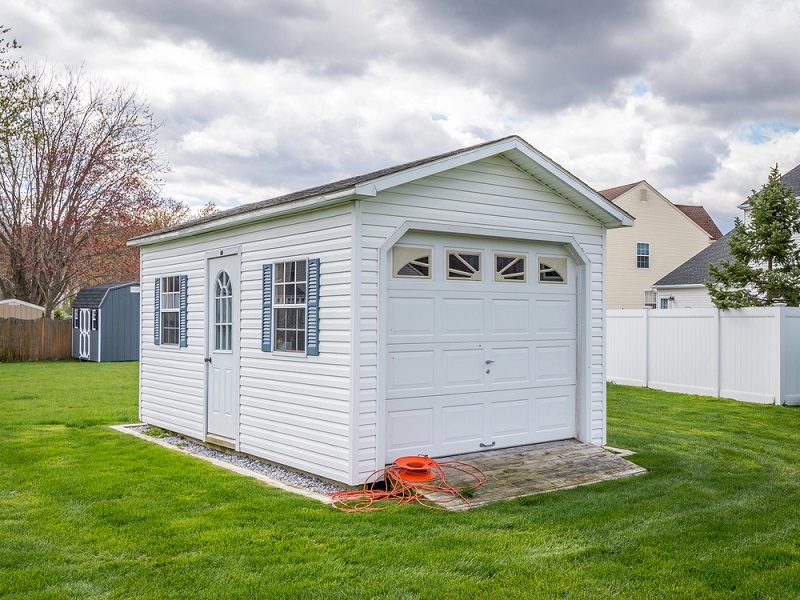
Adding a shed to a rental sounds simple enough. You need extra storage, there’s space in the yard, and a small structure hardly seems controversial. But in Australia, putting a shed on a rental property can involve more than a quick trip to the hardware store. Approval may be needed from the landlord, the property manager, the local council, and sometimes even a strata body. And if nobody sorts out the details up front, questions about ownership, insurance, damage, and removal can get messy fast.
The short answer is this: we usually can’t put a shed on a rental property without permission
In many cases, we’ll also need to check planning rules before anything is installed. Below, we’ll walk through who can approve a shed on a rental property, when council approval may apply, who pays, who owns it, and what should be agreed in writing before a single post goes in the ground.
Because sheds are usually considered a property alteration it is generally best to speak with a rental property manager before planning anything. A local property manager will understand the lease conditions, council rules and typical approval process in that area. Looking for a property manager who operates in the suburb or state where the property is located can make the process much easier. If the rental property is in South Australia for example you may want to speak with JM White Real Estate Pty Ltd which provides rental property management services in Adelaide and can advise on how requests like sheds are normally handled with landlords.
Who Can Approve A Shed On A Rental Property
The first approval almost always comes from the landlord or property owner. As tenants, we don’t generally have the right to add a structure to someone else’s land without consent, even if we’re willing to pay for it ourselves. A shed changes the property. It can affect value, drainage, access, appearance, insurance, and future use of the yard.
In practice, the property manager may be the first person we speak to, but the final decision usually sits with the owner unless the agent has clear authority to approve alterations. If the property is part of a townhouse complex, apartment development, or community title scheme, strata or body corporate approval may also be required.
And that’s before council rules enter the picture. Landlord approval does not override local planning laws. So even if an owner says yes, the shed might still need to comply with council setback rules, size limits, or development controls.
What Tenants Need To Check Before Making A Request
Before we ask to install a shed, it helps to do a bit of assignments. A well-prepared request is more likely to get a proper answer, and faster.
We should check:
- Our lease agreement for clauses about alterations, fixtures, structures, or garden changes
- The available yard space, including access, fences, drainage, and any easements
- The purpose of the shed, such as bike storage, gardening gear, or general household items
- The likely size and materials, because a small resin shed may be treated very differently from a large steel shed on a slab
- Whether the property is in a strata scheme or subject to additional by-laws
It’s also worth thinking about the owner’s point of view. Will the shed improve the property, or just create another maintenance issue? A tidy, well-positioned shed that matches the home can be easier to approve than a bulky structure wedged against a fence line.
How State, Council, And Strata Rules Can Affect Approval
Rental law in Australia is mostly state and territory based, while planning rules are local. That means there’s no single national answer to every shed question.
For example, tenancy laws in states such as NSW, Victoria, Queensland, and WA all deal a bit differently with alterations and modifications. Some reforms in recent years have given tenants more ability to request minor changes, but a shed usually won’t be treated as a simple removable hook or picture rail. It’s often considered a more substantial alteration.
Then there’s council. Local councils set planning and building rules covering matters like:
- maximum floor area
- height limits
- boundary setbacks
- distance from the house
- stormwater impacts
- bushfire, flood, or heritage overlays
If the property is under strata, by-laws may restrict external structures, appearance, common property impacts, or noise during installation. In other words, a landlord’s yes may still be a maybe until the other approvals are checked.
When A Shed May Need Council Approval In Australia
One of the biggest misconceptions is that every small shed is automatically exempt from approval. Sometimes that’s true. Often, it’s only partly true.
Many councils allow certain low-risk outbuildings without a full development application if they meet specific criteria. Depending on the state, this may fall under exempt development, complying development, or permit exemptions. But those pathways are rule-heavy. A shed that misses the limits by a small amount can suddenly require formal approval.
So, can you put a shed on a rental property in Australia without council approval? Sometimes, but only if the proposed shed fits the local rules exactly.
Size, Location, And Setback Rules To Review
The details that most often trigger council issues are size and placement.
We should review:
- Floor area: small sheds may be exempt, while larger ones may need approval
- Height: wall height and overall ridge height both matter
- Setbacks: councils often require minimum distance from rear and side boundaries
- Position on the block: front yard placement is commonly more restricted
- Proximity to other structures: especially homes, pools, retaining walls, or easements
- Site coverage: the total amount of the lot already covered by buildings can matter
Setback rules are a common stumbling point. It’s tempting to put a shed hard against the back fence to save space, but many councils don’t allow that unless the structure meets very specific conditions. Corner blocks can be even trickier because what looks like a side boundary may be treated differently for planning purposes.
Another point: if the property has drainage lines, sewer infrastructure, or utility easements, building over them can be restricted or completely prohibited.
Temporary Vs Permanent Structures
Whether a shed is classed as temporary or permanent can change the approval picture, but not always in the way people expect.
A lightweight flat-pack shed that sits on pavers may feel temporary. Yet if it’s anchored, connected to services, installed for ongoing use, or large enough to function as a real outbuilding, it may still be treated as a structure requiring approval. Councils tend to look at function and impact, not just whether it can theoretically be dismantled.
On the other hand, a genuinely temporary storage unit or freestanding garden box might avoid some of the issues that come with a permanent shed. But landlords may still want written permission in place, especially if the item affects the yard, fences, or neighbours.
As a rule, the more substantial the installation, slab, footings, anchors, electrical connection, plumbing, or significant visual bulk, the less likely it is to be treated as a casual temporary addition.
Who Pays For A Shed And Who Owns It
This is where good intentions can go wrong.
If we, as tenants, ask for a shed because we want more storage, the landlord may say yes, but on the condition that we pay for supply and installation. In other cases, the owner may see a shed as a value-adding improvement and choose to cover the cost themselves. Sometimes the cost is shared. There’s no automatic rule that one side must always pay.
What matters most is what the parties agree before installation.
Ownership is just as important. If a shed is fixed to the land or installed as a permanent improvement, it will often be treated as part of the property. That usually means the landlord owns it once installed, even if the tenant paid for it. That can be a nasty surprise if we assumed we could simply take it with us later.
If the intention is for the tenant to retain ownership, the agreement should say so clearly and explain:
- whether the shed is treated as removable personal property
- how it will be installed without damaging the land
- whether it must be removed at the end of the tenancy
- who pays to restore the site afterwards
Without that clarity, disputes are easy to imagine. We pay for a shed, then move out, and suddenly the owner says it stays. Or the owner expected a permanent improvement, while we thought we were bringing our own storage solution. A short written agreement avoids a lot of grief.
Damage, Insurance, And Maintenance Responsibilities
A shed creates a new set of practical risks. Wind damage, leaks, rust, slab movement, fence damage during installation, water pooling, even neighbour complaints, these things happen more often than people think.
That’s why responsibility needs to be sorted out at the start.
If the shed belongs to the landlord as part of the property, the owner will often need to consider whether it should be covered under the building insurance policy. If it remains the tenant’s removable property, the tenant may need to rely on contents insurance instead. But insurance isn’t automatic. We should never assume a policy covers a new structure without checking.
Maintenance can also get blurry. Who is responsible for:
- keeping the shed weatherproof
- treating rust or corrosion
- replacing damaged panels or doors
- repairing storm damage
- maintaining the slab or base
- ensuring the structure remains safe
In many rentals, landlords are responsible for maintaining the premises, but that doesn’t mean every tenant-installed item becomes their repair problem overnight. If the tenant arranged the shed, paid for it, and uses it exclusively, the agreement may state that the tenant handles upkeep during the tenancy.
Installation damage is another major issue. If a shed requires anchors, concrete, excavation, or fence removal, there’s potential for accidental damage to underground services, paving, landscaping, or neighbouring property. Whoever organises the work should use properly licensed and insured installers where required. Saving a few hundred dollars on a dodgy install can end up being very expensive.
What Happens To The Shed At The End Of The Tenancy
This is the question people often leave until far too late.
At the end of the tenancy, the shed will usually fall into one of two categories:
- It stays with the property because it’s become a fixture or the agreement says ownership passes to the landlord.
- It must be removed by the tenant because it remains the tenant’s property.
If the shed is to be removed, the agreement should also cover restoration. We should know whether we’re expected to:
- remove anchors or footings
- take away pavers or the base
- repair turf, soil, or garden beds
- fix fence sections affected by installation
- make good any damage to drainage or paths
That “make good” part matters. A landlord may be fine with a removable shed while we live there, but not fine with a patchy rectangle of dead lawn and bolt holes when we leave.
If the shed is staying, it’s worth recording that in writing so there’s no argument at bond time. The exit condition report should reflect whether the shed is now part of the premises.
And one small but important point: if the tenant leaves personal goods in the shed after vacating, those items are not magically abandoned just because the structure remains. Stored belongings and the shed itself can end up being treated differently.
How To Ask For Permission In Writing
If we want the best chance of approval, a vague text message saying “mind if we put a shed out back?” probably won’t cut it. A proper written request shows that we’ve thought through the practical and legal issues.
What To Include In A Tenant Request
A strong tenant request should be specific and easy to assess. We should include:
- the proposed shed dimensions
- the materials and colour
- the exact location on the property
- whether it will sit on pavers, a slab, or another base
- whether any anchors, footings, or services are involved
- who will pay for the shed and installation
- whether council or strata checks have been completed
- who will maintain it during the tenancy
- what will happen at the end of the tenancy
Photos, a simple site sketch, and a product link can help. The goal is to remove uncertainty. The more questions we answer upfront, the easier it is for the landlord to make a decision.
What Landlords Should Put In The Agreement
If a landlord agrees, the approval should be recorded in writing, ideally as a signed variation, special condition, or separate agreement.
That document should set out:
- whether the shed is approved as a temporary or permanent structure
- who is responsible for obtaining any council or strata approval
- who pays for purchase, installation, maintenance, and repair
- who owns the shed during and after the tenancy
- whether the tenant can remove it when vacating
- the required condition of the yard at the end of the tenancy
- responsibility for insurance and damage caused by installation or use
This doesn’t need to be pages of legalese. It just needs to be clear. In rental property disputes, clarity beats memory every time.
Conclusion
So, can you put a shed on a rental property in Australia? Yes, sometimes, but not casually. In most cases, we’ll need the landlord’s written permission first, and depending on the shed, we may also need to check council planning rules, building requirements, and strata by-laws.
The smartest approach is simple: confirm the lease terms, check local rules, agree on cost and ownership, and put everything in writing before installation starts. A shed can be genuinely useful on a rental property, but only when the legal and practical details are handled properly. Skip that part, and what looks like extra storage today can turn into a bond dispute tomorrow.