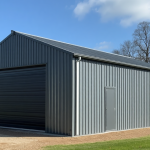
Understanding Australian Disability Access Requirements for Steel Sheds

Disability access requirements for steel sheds are often misunderstood because sheds don’t look or function like traditional buildings. However, once people are working in a shed, visiting it, or using its amenities, accessibility must be considered — and the design stage is where it matters most.
Leaving access decisions until after the slab is poured or the shed kit is ordered is one of the most expensive mistakes shed owners make. Understanding what needs to be designed in from the start helps ensure compliance, usability, and long-term flexibility.
Start With Building Classification and Use
Before any access features are designed, the shed’s intended use and NCC classification must be confirmed.
At the design stage, this means clearly defining:
- Whether the shed is a workplace
- Whether it will be open to the public
- Whether it includes offices, amenities, or customer areas
- Whether future use may change
These factors determine:
- If disability access is required
- Which parts of the shed must be accessible
- Which Australian Standards apply
Access requirements are triggered by use, not by the word “shed”.

Site Access and External Paths of Travel
Accessibility doesn’t start at the door — it starts at the site boundary or parking area.
Design documentation should include:
- Accessible paths of travel from parking or site entry points
- Path widths suitable for mobility aids
- Firm, stable, slip-resistant surfaces
- Suitable exterior lighting
- Gradients that comply with access standards
In rural and industrial sites, this often requires intentional design, not leftover space.
Accessible Parking (Where Required)
If parking is provided and the shed is accessible, at least one accessible parking bay may be required.
At the design stage, this includes:
- Correct bay dimensions
- Shared zone or transfer space
- Clear signage and line marking
- A continuous accessible path from the bay to the shed entrance
Parking is often overlooked in shed projects, but it is part of the overall access requirement.
Entry Points, Doors and Thresholds
Door and entry design is one of the most critical elements of accessibility.
Designs should clearly show:
- Which entrance is the accessible entrance
- Door clear opening widths
- Door swing directions
- Threshold heights (ideally level)
For steel sheds, this usually means:
- Providing a compliant pedestrian access (PA) door
- Designing slab edges and door frames to avoid steps
- Allowing space for future automation if needed
Large roller doors alone are not considered accessible entrances.
Slab Design, Levels and Floor Finishes
The concrete slab design plays a major role in whether a shed is accessible.
Design-stage considerations include:
- Level internal floors without sudden height changes
- Managing falls for drainage without creating trip hazards
- Avoiding excessive cross-falls in circulation areas
- Selecting non-slip finishes suitable for industrial use
Once a slab is poured, these issues are difficult and costly to fix.
Internal Circulation and Layout
Accessibility is not just about entry — it’s about movement within the shed.
Design layouts should demonstrate:
- Clear circulation paths through work and storage areas
- Sufficient turning space where direction changes are required
- Logical placement of work zones, controls, and amenities
This is especially important in workshops and warehouses, where stored materials can unintentionally block access routes.
Amenities and Internal Facilities
If the shed includes toilets, change rooms, or wash facilities, accessible amenity design must be addressed at the design stage.
This includes:
- Allocating space for compliant accessible toilets
- Correct door swings and circulation clearances
- Accessible basins, fixtures, and fittings
- Clear access from main circulation paths
Even where only one accessible amenity is required, it must be correctly designed — retrofitting is rarely simple.
Vertical Access (If Applicable)
Some steel sheds include:
- Mezzanine floors
- Offices above workshops
- Storage platforms
Designers must consider:
- Whether vertical access is required
- If lifts or alternative access solutions such as ramps apply
- Whether exemptions are legitimate and documented
Ignoring upper-level access early can create approval issues later.
Explore
- To see Vermin Proofing for your home or shed go here
- To see Windows and Sliding doors for your home or shed go here
- To find Insulation for your home or shed go here
- To find steel products for your home or shed project go here
- Discover steel watertanks for your home or shed go here
- Explore mezzanine floors for the home or shed here
Wayfinding, Lighting and Visibility
Accessible design also considers how people understand and move through the space.
Design stage inclusions should cover:
- Adequate lighting levels throughout circulation areas
- Minimising glare on concrete and metal surfaces
- Clear visual cues to identify entrances, exits, and amenities
These elements improve safety and usability in large steel structures.
Documenting Accessibility in Drawings and Specifications
One of the most common failures in shed projects is assuming access will be “sorted on site.”
Accessibility should be:
- Clearly shown on architectural drawings
- Referenced in specifications
- Coordinated between designer, engineer, shed supplier, and builder
If it’s not documented, it’s easy to miss.
Designing for Compliance and Practical Use
Good disability access design for steel sheds balances:
- Legal compliance
- Practical, real-world use
- Industrial durability
When accessibility is considered early, it rarely adds complexity — but when it’s ignored, it almost always adds cost. Reach out today, and let us help design your next shed with disability access in mind.