Transform Your Space: Creating the Ultimate Family Activity Hub at Home

There’s something special about watching your home evolve to meet your family’s changing needs. Maybe you’ve got a shed that’s become more storage dump than useful space, or perhaps you’re looking at your garage and wondering how to make it work harder for your family. Australian homes, with their brilliant outdoor spaces and often generous shed areas, offer incredible opportunities to create dedicated zones for different family activities. But here’s the thing: it’s not just about having the space. It’s about organizing it in a way that actually gets used and genuinely makes family life easier and more enjoyable.
The beauty of creating distinct activity areas in and around your home is that everyone gets their own corner while still staying connected. Kids can be busy with their interests, parents can pursue hobbies without taking over the entire house, and suddenly that shed or spare room isn’t just holding boxes of stuff you’ll “sort through one day.” It becomes this living, breathing part of your home that adds real value to daily life. Let’s explore how you can carve out dedicated spaces for crafts, active play, and learning without needing a mansion or a massive renovation budget.
The Art of the Craft Corner: Where Creativity Takes Root
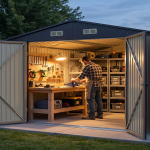
Setting up a proper craft area is one of those things that sounds simple until you actually try it. You need good lighting (naturally), storage that makes sense, surfaces that can handle a bit of mess, and enough space that you’re not constantly putting everything away just to use the area for something else. Whether you’re claiming a corner of your shed, converting part of the garage, or dedicating a section of a spare room, the key is making it functional enough that you’ll actually use it instead of crafting at the kitchen table and leaving yarn everywhere (we’ve all been there).
Lighting matters more than people realize. Natural light is brilliant for detailed work, but you’ll also want some decent overhead lighting and maybe a task lamp for evening projects. If you’re working in a shed, consider adding a window or skylight if possible. The difference it makes to both your enjoyment and the quality of your work is huge. Temperature control is another consideration in Australian sheds. Insulation or even just a fan can make your craft space usable year-round instead of being a summer oven or winter icebox.
Storage solutions can make or break a craft area. Clear containers let you see what you’ve got without opening everything. Wall-mounted pegboards keep tools visible and accessible. Shelving units maximize vertical space, which is especially important in sheds where floor space might be limited. Label everything because future you will thank present you when you’re searching for that specific shade of thread or those buttons you know you saved. Rolling carts are fantastic for craft spaces because you can move supplies around and tuck them away when you need the workspace for something else.
The work surface itself deserves thought. A sturdy table at the right height prevents back pain during long crafting sessions. Some people swear by standing-height surfaces for certain tasks. If you’re into fabric crafts, having a large cutting mat permanently set up saves so much time. For those who love knitting, there’s something deeply satisfying about having a dedicated spot with good seating, proper lighting, and all your supplies organized and ready. Being able to shop knitting yarns means you can stock up on quality materials and actually keep them organized in your new space instead of scattered through the house. Plus, when you’ve got a proper setup, you’re way more likely to pick up that project instead of putting it off because getting everything out feels like too much effort.
Creating zones within your craft area helps too. A cutting and measuring zone, a messy work area for things like painting or gluing, and a clean assembly area where finished pieces can dry or be photographed. This kind of organization might seem excessive, but it genuinely makes crafting more enjoyable because you’re not constantly clearing space or worrying about ruining something.

Active Play Zones: Keeping Kids Moving and Entertained
Kids need to move. Like, really need to move. And Australian weather, as brilliant as it often is, doesn’t always cooperate. Having a designated active play area that works in various weather conditions is honestly a game changer for family life. This might be a covered outdoor area, a cleared-out section of the garage, or even a rumpus room that’s set up specifically for energetic play rather than trying to keep everything precious and breakable.
The beauty of dedicated play spaces is that kids can leave things set up. That obstacle course doesn’t need to be dismantled every evening. The art project can stay on the table. The building block city can exist for more than three hours before someone needs the dining table. This continuity makes play deeper and more imaginative because kids can return to projects and build on them over days or weeks.
Safety is obviously crucial for active play areas. Soft flooring or mats matter, especially for younger kids who are still mastering coordination. Foam tiles are brilliant because they’re cushioned, easy to clean, and you can configure them however you need. Make sure there’s nothing with sharp edges or corners at kid height. If you’re using a shed or garage, check for any tools, chemicals, or equipment that needs to be locked away or moved to higher storage.
Storage for play equipment is its own challenge. Outdoor toys often live in this weird limbo where they’re too dirty to bring inside but too expensive to leave out in the weather. A shed with a dedicated play equipment area solves this perfectly. Balls, ride-on toys, sports equipment, and outdoor games all have a home where kids can (theoretically) put them away themselves. Bins on wheels make cleanup easier, and clear or labeled containers help kids find what they want without dumping everything out.
Speaking of ride-on toys, they take up serious space but kids absolutely love them. Whether it’s bikes, scooters, or those little cars, having proper storage keeps them in good condition and prevents the front yard from looking like a toy store exploded. A kids scooter is one of those investments that gets used constantly if you’ve got the right space for it. They’re perfect for developing balance and coordination, they get kids outside and moving, and they’re generally more manageable than bikes for quick trips around the yard or down to visit neighbors. Setting up a little track or designated riding area in your yard or driveway gives kids somewhere to practice and play without worrying about them scooting into the garden beds or your parked car.
Creating different zones within your play area works well too. A quiet corner with cushions for reading or puzzle-solving. An active zone for jumping, dancing, or playing games. Maybe an art station where mess is expected and encouraged. When kids have options within their play space, they’re more likely to stay engaged for longer periods, which gives parents some actual breathing room.

The Learning Nook: Making Education Feel Less Like a Chore
Homeschooling, homework, or just encouraging learning for fun all benefit from having a dedicated space. It doesn’t need to be fancy. Actually, overly elaborate “learning centers” sometimes backfire because they feel too formal and kids resist using them. What works is a comfortable spot with good lighting, minimal distractions, and easy access to learning materials.
Desks and chairs need to be the right height for your kids. This matters more than you’d think for concentration and comfort. Their feet should reach the floor or a footrest, and they shouldn’t be hunching over or stretching up to work. Adjustable furniture grows with kids, which is brilliant for the budget. Having a computer or tablet charging station prevents the “my device is dead” excuse and keeps cords organized.
Bookshelves or storage cubes keep textbooks, workbooks, and reference materials tidy and accessible. A bulletin board or whiteboard gives kids space to pin up reminders, maps, or their work. Some families love having a globe or atlas permanently displayed. Others keep a bin of educational games and puzzles nearby for when traditional desk work needs a break.
Making learning engaging is the eternal challenge. History, in particular, can feel dry when it’s just reading textbook paragraphs and answering questions. But when you mix it up with hands-on activities, visual timelines, or creative projects, suddenly kids are actually interested. Resources like fun history worksheets transform standard curriculum into something more engaging by adding variety and interactive elements. When worksheets are designed with kids in mind rather than just regurgitating facts, they become tools for actual learning instead of busy work to endure.
The learning space should feel different from play areas but not so formal that kids dread going there. Some families paint it a calm color, add plants, or include comfortable seating options beyond just a desk chair. Bean bags or floor cushions work great for reading time. A small rug defines the space and adds warmth. Good natural light during the day makes the space more pleasant, and a quality desk lamp handles evening homework sessions.

Bringing It All Together: The Multi-Purpose Space That Actually Works
The real magic happens when you create spaces that can serve multiple purposes throughout the day or week. Your craft corner might double as a homework space when needed. The active play zone could transform into an indoor picnic area for a rainy day lunch. Flexibility matters because family needs change constantly.
Furniture on wheels is your friend here. Tables that roll, storage bins with casters, and even lightweight chairs that stack make reconfiguring spaces quick and easy. You’re not committed to one layout forever, and kids can help rearrange things for different activities.
Keeping everything organized sounds great in theory but requires actual systems that your family will use. This means storage solutions that match your family’s habits rather than some Pinterest ideal. If your kids never put things back in labeled bins, maybe you need open baskets they can toss things into instead. If craft supplies always end up scattered, perhaps having a carry-all caddy works better than permanent storage. Work with your family’s natural tendencies instead of fighting them.
Regular decluttering prevents these spaces from getting overwhelmed. Every few months, go through and remove broken toys, dried-up craft supplies, or outgrown learning materials. Kids can help with this, and it teaches them about maintaining spaces they use. Donate or pass on items in good condition, and recycle or bin things that are truly done.

Making Your Vision Reality
Creating dedicated family activity spaces isn’t about following someone else’s blueprint. It’s about understanding how your family actually functions and building spaces that support that. Start with one area. Maybe it’s finally organizing that craft corner you’ve been dreaming about, or clearing space in the shed for kids to safely store and access their outdoor toys. Small wins build momentum.
Budget constraints are real for most families. Prioritize what matters most and be creative with solutions. Second-hand furniture works brilliantly for craft and play spaces where wear and tear is expected anyway. DIY storage solutions using recycled materials can be both functional and teach kids about resourcefulness. Not everything needs to be perfect or Instagram-worthy. It needs to work for your family.
The spaces you create today grow and change with your family. That play area might become a teen hangout space eventually. The learning corner could transform into a hobby area when kids get older. Craft spaces often become places where multiple generations connect over shared projects. The time and effort you put into organizing these areas pays dividends in family connections, developed skills, and honestly, just making daily life run more smoothly.
Your home, whether it’s got a massive shed, a modest garage, or just some clever room reconfiguration, can accommodate the activities that matter to your family. It’s about being intentional with your space and creating areas that invite engagement rather than requiring constant setup and cleanup. When everyone has their spot to pursue interests, create, play, and learn, the whole family benefits. And honestly, there’s something deeply satisfying about looking around your home and seeing spaces that work hard for your family instead of just existing.