Storm-Ready Yards: How Strategic Pruning Safeguards Outbuildings and Roofs
Storm damage often starts with a single weak branch falling onto a shed, garage, or roof. Strategic pruning reduces that risk while keeping healthy trees in good shape. It also creates clearance around gutters, solar panels and outbuildings, where overhanging growth can scrape surfaces or drop debris.
A storm-ready yard needs more than a quick trim before severe weather arrives. Trees should be assessed early, pruned correctly and checked again after major weather events. This practical routine can prevent avoidable damage without stripping away valuable shade.
Start with the high-risk areas
Walk around the property and identify branches growing directly above sheds, carports, pergolas and roof sections. Look for dead wood, split limbs, hanging branches and places where the canopy touches a structure. Pay particular attention to heavy limbs that extend far from the trunk, as their weight creates extra strain in high winds.
Include nearby fences, power connections and rainwater tanks in your inspection. A useful storm preparation guide also recommends securing loose garden items and checking drainage, since airborne objects and pooled water can compound tree-related damage. Take photos of anything concerning so you can compare changes over time or show a tree professional.
Know when professional help is needed
Small twigs may be manageable from the ground with suitable hand tools, but large branches and elevated work call for specialist skills. Contact an arborist if a tree leans towards an outbuilding, has major cracks or contains dead limbs above a roof. Professional advice is also sensible when branches sit near service lines or require climbing equipment to reach.
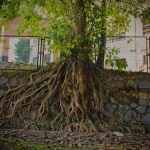
A qualified assessment can reveal problems that aren’t obvious from ground level, including weak branch unions, internal decay and root disturbance. In some cases, selective pruning will reduce the load on a vulnerable section. In other cases, the safest option may be to remove a badly compromised tree before the next severe weather system arrives.
Prune for strength and clearance
Good pruning removes specific hazards while preserving the tree’s natural structure. Cuts should target dead, damaged, or poorly attached branches, along with growth that rubs against roofing or blocks safe access around a shed. Adequate clearance also stops wet leaves from collecting in gutters and reduces scratches to paint and cladding.
Avoid removing a large share of the canopy in one session. Heavy cutting can stress a tree and encourage clusters of weak new shoots. Topping, where major stems are cut back indiscriminately, can leave large wounds and unstable regrowth. A staged pruning plan is often more suitable for mature trees, particularly if they haven’t received regular care for several years.
Give the whole yard a storm check
Branches are only one part of the problem. Blocked drains, loose pots and unsecured sheets can all cause trouble when wind and heavy rain arrive. Practical storm-ready garden tips include inspecting trees for damaged limbs and moving unsecured items to a protected spot.
Check that shed doors latch firmly and that roof fasteners show no obvious corrosion or movement. Clear leaves from gutters, downpipes, and surface drains so water can drain quickly. Mulch piles and pruned material should also be cleared away or contained. Even light offcuts can become airborne, while larger piles may block drainage paths beside an outbuilding.
Time the work before bad weather
Schedule routine inspections during calm conditions, ideally before the season that usually brings strong winds or heavy rain to your area. This allows time for careful pruning and proper clean-up. Last-minute cutting can create fresh debris and may encourage rushed decisions when conditions are already unsafe.
Recheck trees after every major storm, even if no branch has fallen. New cracks, exposed roots, or a sudden lean may appear after saturated soil and strong gusts. From a safe position, inspect the canopy and the ground around each trunk. Keep people away from any damaged area until it has been assessed.
A well-pruned tree should retain a balanced canopy with clear space above the shed roof and no damaged limbs left hanging overhead. That visible clearance is a useful benchmark to check each season, especially before the forecast turns rough.