Storing a Car In Your Shed Without Wrecking the Paint

The signs build slowly. Water spots appear on the roof, swirl marks spread across the bonnet and the cabin starts to smell musty. A Sydney detailing and paint protection studio such as Glosshaus can reverse much of that, but prevention starts with the shed itself.
What Does a Steel Shed Do to a Parked Car?
Steel heats fast and cools fast. Kidsafe NSW warns that a closed car on a typical summer day can run 30 to 40 degrees hotter than outside. Park that car under an uninsulated roof and the cabin bakes twice over. Dashboards crack, leather dries out and rubber door seals harden faster.
Night brings the opposite problem, as moisture settles on every cold surface. Dust adds a third layer. Unsealed floors and gaps under the roller door feed fine grit onto the paint. Wipe it off with a dry cloth and you drag it across the clear coat.
Why Does Water Drip Onto a Car Under a Steel Roof?
The Australian Steel Institute sets out the mechanism in its factsheet on metal roofing and condensation. Clear night skies can drop a metal roof below the dew point. Moisture in the air then condenses on the sheeting. Where night air circulates freely underneath, as in open sheds and carports, the institute treats condensation on the underside as expected.
Those droplets fall onto the car, carrying roof dust, and dry into rings of minerals. Over a winter they etch into the clear coat.
Humidity decides how often it happens. Dew point tables from the Reflective Insulation Manufacturers Association show that air at 21°C and 50% relative humidity forms dew at about 10°C. At 90% humidity, the dew point climbs to roughly 19°C. That is why coastal and subtropical sheds drip far more often than inland ones.
How Should You Set Up a Shed for Vehicle Storage?
Tackle these upgrades in order:
- Ventilate high and low.Wet air needs an exit at the ridge and fresh air an entry near the floor. Choosing weatherproof shed ventilation moves air through without letting rain in.
- Insulate the roof.An anti-condensation blanket or foil sarking under the sheeting keeps the underside warmer. Fewer droplets then form above the bonnet.
- Seal the gaps.Brush seals on the roller door guides and a rubber strip along the bottom rail block dust, leaves and rodents.
- Sort out the floor.A sealed or epoxy-coated slab cuts concrete dust and rising damp. A vapour barrier under a new slab does the same job from below.
- Manage the moisture you bring in.Never park a wet car and shut the door straight away. A wider moisture-control plan protects tools and stored gear as well.
Clear roof sheets need care too. Cancer Council Australia says average UV Index values reach 11 or more across most of the country on clear January days. A clear sheet lets that sun fall on the same panel every afternoon. Park so the patch lands on the floor.
How Do You Keep Mice Out of the Engine Bay?
A quiet shed with a warm engine is ideal rodent territory. The Australian Museum notes that the house mouse prefers secluded parts of buildings and nests in shredded material. It measures only 60 to 100 mm and weighs 10 to 25 g, so it fits through small gaps. It can breed at two months old, with four to eight young per litter.
Mice shred cabin filters and seat foam for nests, and they chew wiring looms. Keep them out with a few habits:
- Store pet food, birdseed and grain in sealed metal bins.
- Fit door seals and mesh over any small vent openings.
- Lift the bonnet every few weeks and look for droppings or nesting material.
- Check the cabin air filter housing, a common nesting spot behind the glovebox.
- Start and drive the car regularly so the engine bay never stays undisturbed.
- Use traps rather than baits, so a poisoned mouse does not die inside a duct.
Carport, Shed or Garage: Which Risks Come With Each?
Each type of cover blocks some threats and creates others.
| Storage type | Main risk to the car | Best first fix |
| Open carport | Condensation drip, bird droppings, wind-blown dust | Roof insulation blanket and a breathable cover |
| Enclosed steel shed | Summer heat, trapped humidity, rodents | High and low ventilation plus door seals |
| Brick garage under the house | Damp air, cabin mould, poor airflow | Wall vents or an exhaust fan, then a dehumidifier |
| Shed with clear roof sheets | Concentrated sun and heat on one panel | Reposition the car or shade the sheet |
When Should a Professional Detailer Step In?
Some damage goes past what a bucket and sponge can fix. Book a detailer when you notice any of the following:
- Water spots that stay after a proper wash.
- Fine swirl marks from wiping dust off dry paint.
- Mould spots or a musty smell inside the cabin.
- Faded or chalky trim on the side facing a skylight.
- A car about to go into storage for several months.
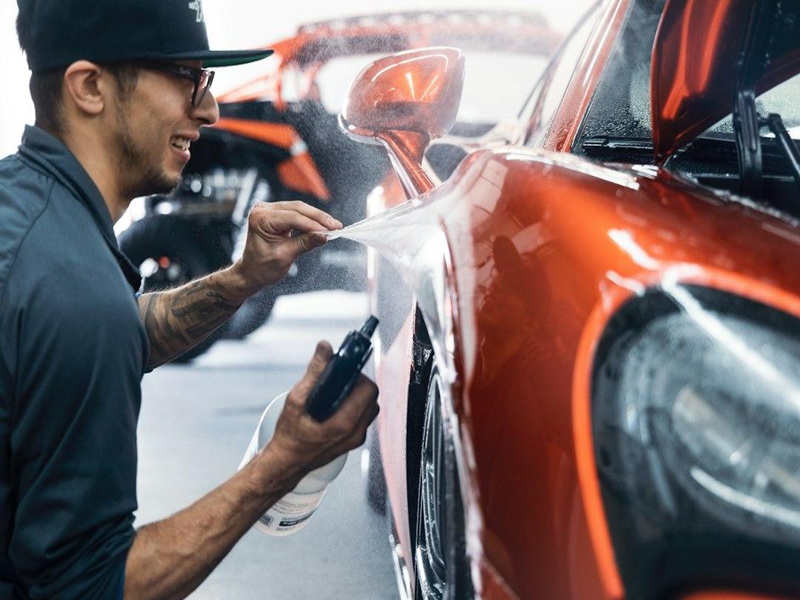
Before storage, a ceramic coating or paint protection film gives the paint a sacrificial layer. Look for a studio that installs certified film, such as XPEL, and inspects the car under proper lighting before it quotes.
Frequently Asked Questions
Should I Use a Car Cover Inside a Shed?
Yes, as long as it is breathable. A soft, breathable cover keeps dust and drips off the paint while letting moisture escape. Plastic or waterproof covers trap humidity against the finish and can make mould worse. If a fully enclosed shed is not necessary, a simple car shelter may be another option for protecting a vehicle from direct sunlight and other outdoor elements.
How Often Should You Start a Stored Car?
Aim to start and drive it every couple of weeks. A short drive warms the oil, tops up the battery and disturbs any mice that have moved in. If that is not possible, fit a battery maintainer.
Can a Dehumidifier Help In a Steel Shed?
It can, provided the shed is reasonably sealed. In an open or draughty shed, a dehumidifier simply tries to dry the outside air. Fix ventilation and seals first, then add one if condensation continues.
Does Ceramic Coating Stop Water Spots?
It reduces them but does not stop them. A coating makes water bead and roll off, so fewer droplets dry on the paint. Mineral spots can still form on a coating if the car is never washed.
Treat the Shed as Part of the Car
A shed protects a car only as well as it breathes, seals and stays clean. Get the airflow right, close the gaps and check the engine bay often. It is worth considering the actual daily cycles of opening and closing the roller door, as frequent use can contribute to wear over time. Then a stored car comes out looking the way it went in, and any detailing work becomes upkeep rather than repair.