Planning a Wash Bay in Your Shed or Workshop: Drainage, Approvals and Design Basics
It is a wet Friday afternoon, and the crew has just pulled a muddy excavator into the machinery shed because the yard is a bog. Within minutes a stream of grey water, diesel sheen and sediment is working its way across the slab towards a floor waste nobody has traced. Washing heavy equipment indoors is sensible, because it saves time and protects the machine. It only works, though, when the shed has a drainage plan that says where every litre goes. This guide covers the basics for workshops, depots and farm sheds in Queensland that wash vehicles or machinery as part of a business.
1. Why Wash Water Needs a Plan in a Queensland Shed
Wash water from a business is treated differently from household water. Logan City Council cites the Water Supply (Safety and Reliability) Act 2008, which defines trade waste as water-borne waste from business, trade or manufacturing premises, other than prohibited substances, human waste or stormwater. A shed that washes trucks, tractors or engine parts for work therefore produces trade waste if the water goes to the sewer, and Council says it may accept that waste only where it is satisfied that its legislative and treatment plant licence obligations will still be met.
Council requires most trade waste to be treated before it enters the wastewater system, and it holds the property owner responsible for the treatment devices and their servicing. This guide is about sheds where washing is part of a business. A home garage with a bucket and hose follows different rules, so ask your council before you assume anything.
2. Wash Bay Drainage Design Basics
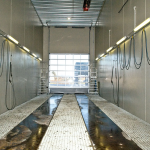
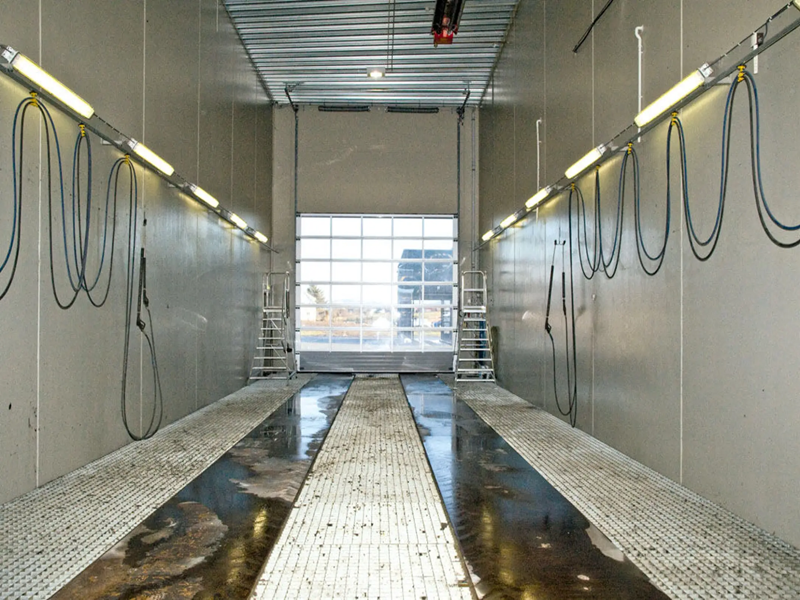
Think of a wash bay as a small drainage system with a slab on top. Good wash bay drainage design follows the water from the hose to the final outlet and sizes every step in between. The slab falls to a collection point, a silt arrestor catches sediment, and an oily water separator removes oil before anything reaches the sewer. Logan City Council lists washing and detailing of motor vehicles, trucks and heavy machinery among the activities that generally need an oily water separator, and says silt arrestors are generally installed in wash bays that clean motor vehicles, trucks and heavy vehicles.
A workable shed layout usually includes:
- A slab with falls to a single collection point, kept separate from the rest of the workshop floor.
- A roofed and bunded bay, so rain does not add to the volume of wash water.
- A silt arrestor and an oily water separator, sized for the peak hourly flow.
- A pump or holding tank where gravity cannot do the job.
- Quick-breaking detergents only, because Council says detergents used in oily wash water must separate quickly from the oil.
Unroofed bays need extra thought. Logan describes diversion valves for them: a standard valve senses when the hoses are running, sends the water to the separator and closes shortly after so that rain goes to the stormwater system, while a first-flush valve diverts the first 10 mm of rain to a pit or holding tank. Sizing matters too. Council’s minimum for a new oily water separator is 1,500 litres per hour, with a 1,000-litre holding tank, and an undersized device counts as a non-compliance that can bring corrective actions.
3. Approvals Before You Pour the Slab
Approval comes before the slab, not after. Under Council’s rules every pre-treatment device must appear on the hydraulic plans lodged as part of a plumbing application. Logan City Council’s trade waste pre-treatment requirements say Council assesses the size and location, a licensed plumber must carry out the plumbing and drainage, Council verifies the work, and a compliance certificate follows when it is satisfactory. Installation conditions are generally set by a hydraulic engineer and shown on those plans.
Because the plans must be right before Council sees them, owners in south-east Queensland often bring in hydraulic engineers in Brisbane early. An engineer can work out the falls, pit positions and pre-treatment sizing, and prepare the drawings that go with the plumbing application.
The owner’s duties continue after the build. Devices must be maintained to the manufacturer’s specifications, and the area around them kept clear for servicing. Logan’s standard servicing interval for a separator and its holding tank is 26 weeks, which Council may adjust, and a holding tank must be serviced by a licensed liquid waste transporter. Add that running cost to the budget from the start, and treat Logan’s rules as one example, because your own council or water utility sets its own.
4. Power, Water and Equipment
Equipment decides what the shed has to supply. Pressure washers may run on single-phase or three-phase power, or on petrol or diesel engines, and a pump chamber adds another electrical load. Plan hose points and power together, and keep them outside the splash zone where possible. The shed’s switchboard and any sub-board then need to carry the new load, and the guide to powering a shed or workshop safely covers supply capacity, sub-boards and circuits in detail.
Shed Wash Bay Checklist
Before you book a concreter, work through a short list:
- Confirm the washing is part of a business activity, and check your council’s trade waste rules.
- Ask a hydraulic designer to plan the route from the hose to the outlet before the slab is poured.
- Plan slab falls to one collection point, away from the workshop floor.
- Decide whether the bay will be roofed and bunded, or needs a diversion valve.
- Size the silt arrestor, separator and any holding tank for peak flow.
- Lodge the hydraulic plans with council as part of a plumbing application.
- Check the shed’s power for the pressure washer and pump before ordering equipment.
- Budget for servicing the separator and holding tank, and line up a licensed transporter.
A wash bay is easy to get right on paper and expensive to fix once the slab is poured. Plan the water first, and the rest of the shed follows.