Shed and Garage Roof Leaks: Where They Start and When a Patch Is Enough
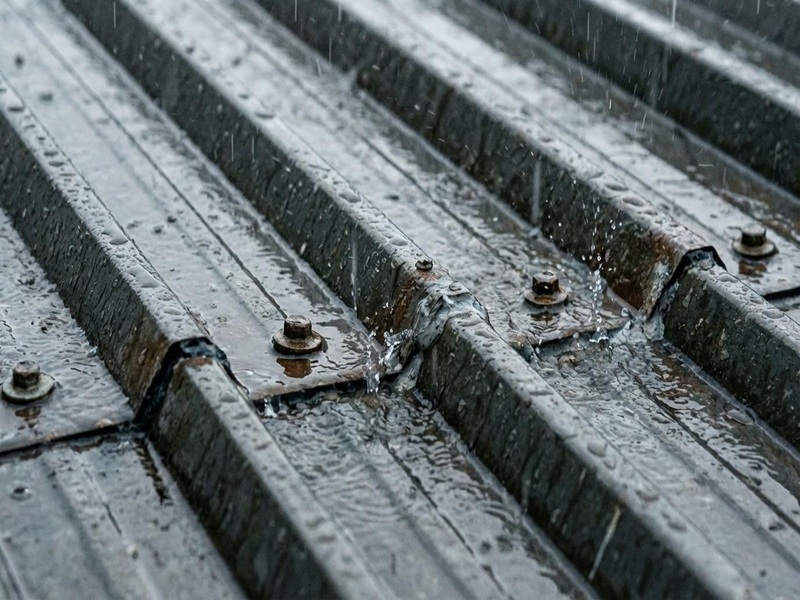
A shed roof leaks differently from a house roof. There is usually no ceiling to hide it, so you see the drip the first time it rains, and there is usually no sarking under the sheets, so there is nothing to catch water that gets past them. The upside is that most shed leaks are simple to find and cheap to fix, as long as you fix the right thing. Here is where they start, in rough order of how often we see them.
1. Screw lines
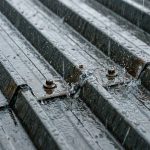
The most common shed leak is the roof screws themselves. The neoprene washer under each screw head perishes after 10 to 15 years in the sun, the screw backs out a turn or two as the sheet expands and contracts, and water follows the thread straight through. You will see a line of drips in a row rather than one wet spot. On a Colorbond or zincalume shed the fix is to replace the screws with new ones a gauge larger, with new washers, driven just tight enough to compress the washer without dishing the sheet. Overtightening is as bad as loose, because it splits the washer.
2. Flashings and the ridge
Where the roof meets a wall, a roller door header, a skylight or the ridge cap, there is a flashing, and flashings fail at the laps and the ends. Look for sealant that has gone hard and pulled away, for foam infill strips under the ridge that have crumbled, and for flashings that were never turned up under the sheet above. Wind driven rain gets under a short flashing even when the roof is sound. The fix is usually a new flashing with the correct overlap, not more silicone on the old one.
3. Side laps and end laps
Sheets are meant to overlap by a set amount and the lap should face away from the prevailing weather. On a shed that was put up quickly, the laps are sometimes short or facing the wrong way, and on low pitched roofs under about five degrees water can be driven uphill between the sheets. If the drips are along a line that matches a sheet edge rather than a screw row, this is the one.
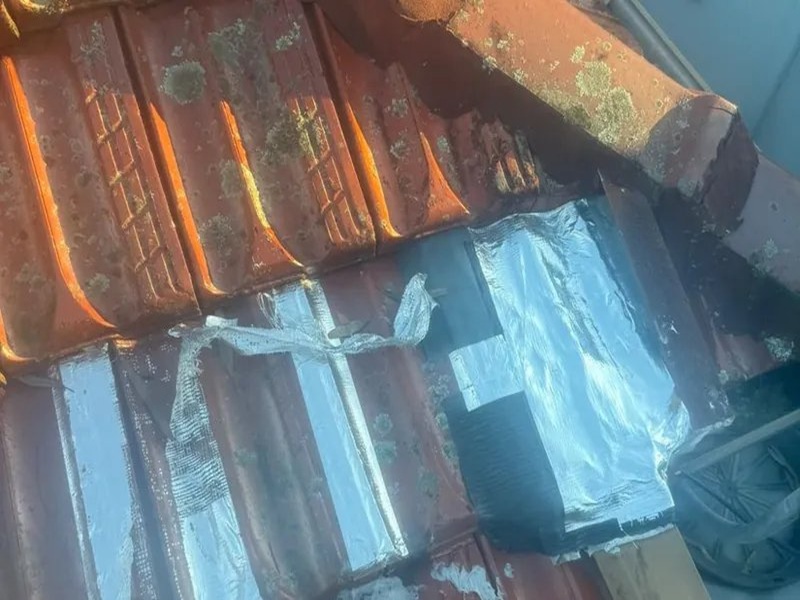
Tape patches like these hold for a season. The water finds the edge, lifts it and comes in anyway.
4. Rust
Rust starts where water sits: at the bottom of a sheet where it drips into the gutter, around screws where the coating was damaged, and under anything left lying on the roof. Surface rust can be treated and painted. Once you can push a screwdriver through, the sheet needs replacing, and so do any sheets it overlaps, because rust spreads under the lap where you cannot see it.
5. Gutters and box gutters
A gutter that overflows at the back runs water down the inside of the wall, and from inside the shed it looks like a roof leak. Clear the gutter, check the fall to the downpipe, and look at any box gutter where two roof sections meet. Box gutters on sheds are often undersized and block easily, and a blocked box gutter in a storm puts water over the top of the sheets in minutes.
When a patch is enough
A patch is fine when the sheet is sound and the problem is one point: a single failed screw, a nail hole from an old bracket, a small puncture from a dropped tool. Use a proper roofing sealant rated for metal and UV, clean and dry the surface first, and plan to look at it again in a year.
A patch is the wrong answer when the drips are in a line (that is a system failing, not a spot), when the sheet is rusted through, when the leak is at a flashing, or when it is the second time you have patched the same place. Tape and silicone over those just move the water somewhere you cannot see it, and on a shed with timber purlins that means rot you find when a sheet goes soft underfoot.
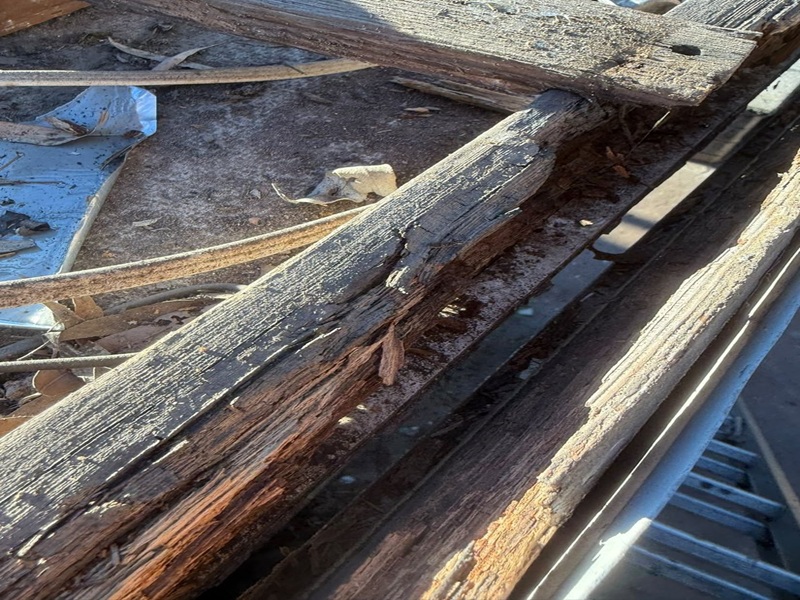
What a slow leak does to roof timber over a few years. The repair now includes the frame, not just the roof.
Shed roofs and house roofs
If the shed is attached to the house, or the leak is where a lean to meets the main roof, the job changes. Those junctions carry water from both roofs, the flashing has to work with tiles on one side and sheet on the other, and getting it wrong puts water into the house ceiling. That is the point to call a roofer. For a sense of what it costs, roof leak repairs in Sydney run $700 to $1,500 for most jobs, with the cause written up and photographed before any work starts, and the same price logic applies in most Australian cities.
A five minute check twice a year
Before summer storms and after winter, walk around the shed and look up. Screws standing proud, rust streaks below the screw lines, sealant lifting at flashings, daylight through a lap, gutters holding water. Each of those is a $20 fix today and a new sheet or a new purlin in two years. Keep anything off the roof that holds moisture, keep the gutters clear, and a steel shed roof will outlast the shed.