The Gum Tree Over Your Shed: Why That Tree Is a Liability, Not Just Shade
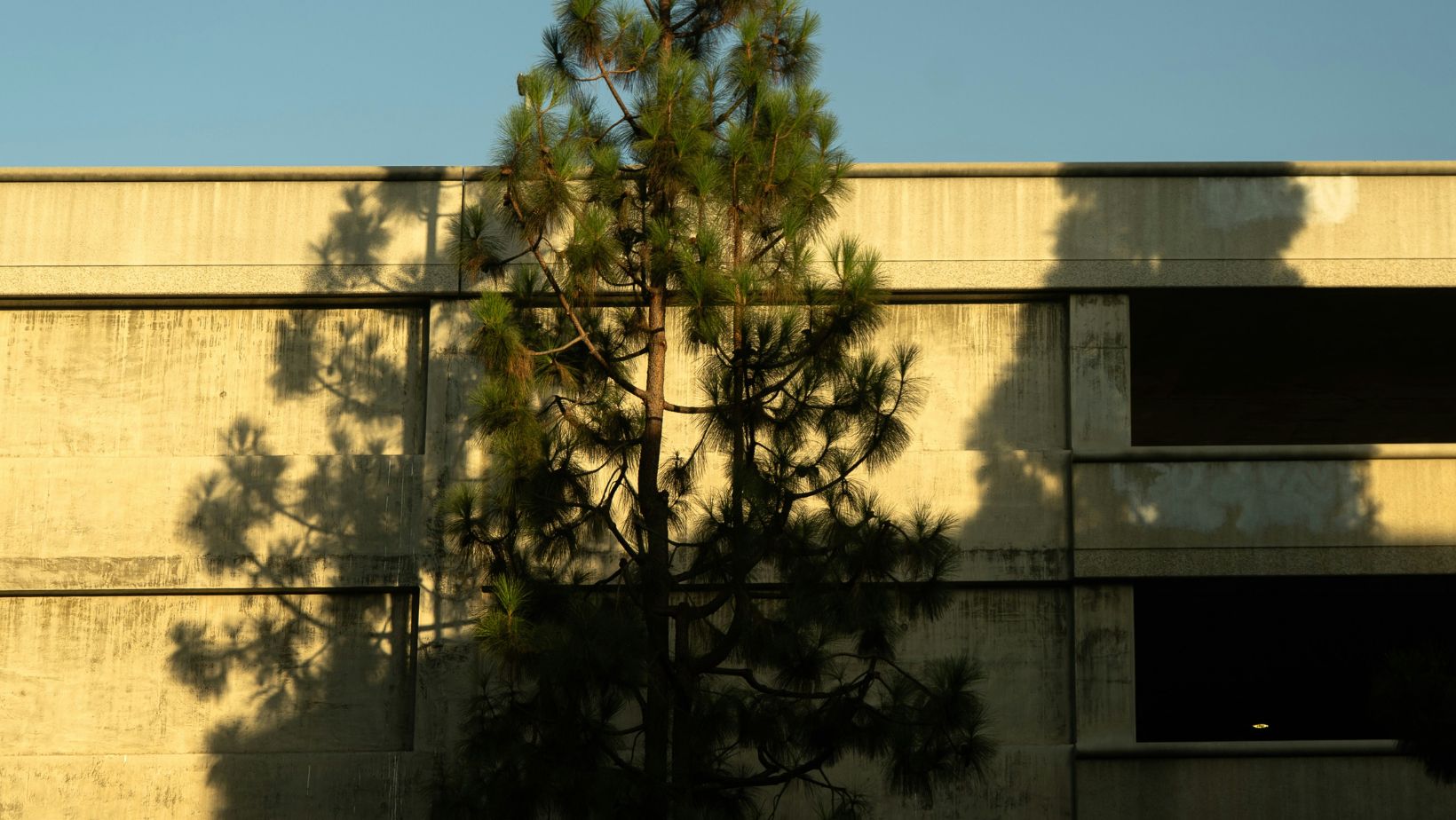
Most people look at the big tree next to the shed and see shade, birds, and something the kids climb. An arborist looks at the same tree and sees a maintenance schedule nobody’s keeping.
That’s the gap this article is about. The tree near your shed isn’t scenery. It’s a piece of living infrastructure sitting a few metres from a steel roof, and like everything else on your block, it has a failure mode and a cost you’re either paying now or paying later.
Here’s the uncomfortable version: the tree that lands on your shed is almost never the one you were worried about.
The tree near a building plays by different rules
A gum in the middle of a paddock can drop a limb and hurt nothing but grass. The same gum two metres off your shed wall is a different proposition entirely, and not for the reason most people assume.
It’s not just about the trunk falling. It’s the canopy overhanging the roof, the root plate lifting a slab, the branch resting on a gutter and sawing at the Colorbond every time the wind moves. A tree beside a structure has more ways to cost you, and the slow ones do more damage over time than the dramatic ones.
The lean matters too. A tree that grows leaning away from a building is usually fine. One that leans toward the shed, especially if that lean has changed, is telling you something. Trees don’t lean more for no reason. Soil moves, roots let go, and weight shifts after a big limb is lost.
The implication for you: a tree you’d happily ignore in open ground becomes a job the moment it’s within falling distance of something you’ve paid to build.
The warning signs that actually predict failure
You don’t need to be an arborist to read the obvious tells. Most tree failures near homes give notice; people just don’t know what they’re looking at.
Watch for these:
- Deadwood in the canopy. Bare grey limbs with no leaves are the branches most likely to come down first, and they come down without a storm.
- A lean that has changed. Fresh soil cracking or lifting on one side of the base means the root plate is moving.
- Fungal brackets at the base or on the trunk. Shelf-like growths often signal internal rot you can’t see from outside.
- Included bark in a tight V-fork. Where two stems grow up against each other in a narrow fork, the join is weak and splits under load.
- Cracks, cavities, or peeling bark on a major limb or the trunk.
Here’s what that looks like in practice. A peppermint behind a client’s shed in Perth looked completely healthy, with a full canopy and no obvious problem. It had a single tight fork with bark trapped inside it, the kind of defect you only notice if you’re looking for it. One wet, gusty night, the whole co-dominant stem split off at that fork and came down across the shed’s lean-to. The tree was “fine.” The fork was not.
The lesson: green leaves are not a health certificate. The structure underneath is what holds or fails.
The slow damage you’re already paying for
Forget the falling limb for a second. The tree next to your shed is probably costing you money right now, quietly.
Leaf and bark litter fills the gutters. Once the gutter overflows, water tracks back under the eave and down the wall sheets. On a steel shed, that’s exactly where rust starts, at the base of the wall and behind the gutter line where you never look.
I’ve seen this end badly on an otherwise tidy shed. The owner ignored an overhanging branch for years because “it’s just leaves.” The gutters blocked every autumn, overflowed every storm, and water wicked under the roller door track. By the time anyone noticed, the bottom 200mm of two wall sheets had rusted through from the inside. The branch cost nothing to remove. The repair didn’t.
Then there are roots. A mature tree’s roots can lift and crack a slab, push against footings, and chase moisture into drains. None of that announces itself. It shows up as a hairline crack you dismiss, then a door that won’t close, then a quote.
Think of it like a slow roof leak. The problem is invisible right up until the day it isn’t, and the bill scales directly with how long you looked away.
The high cut near a structure is the dangerous one
This is where good intentions get people hurt. A small prune you can reach from the ground is a Saturday job. The branch hanging over the shed roof, near a powerline, on a tree you can’t safely climb, is not.
Working at height is one of the deadliest things you can do in this country. Safe Work Australia’s latest figures rank falls from a height as the second-leading cause of worker deaths, accounting for 13% of fatalities, or 24 deaths, in 2024. The detail that should stop any weekend pruner cold: about half of all fatal falls happen from three metres or less. You don’t have to be high up. You have to be high enough, once.
Now add a chainsaw, a ladder propped on a gutter, and a loaded limb that swings the wrong way when you cut it. That’s the recipe.
This is where the right gear earns its place. A serious tree near a structure usually gets taken down from an elevated work platform, the machine most people call a cherry picker, rather than by climbing a compromised tree. On a job in Perth’s eastern suburbs I watched an arborist remove a half-dead marri leaning over a shed roof. The limbs were too brittle to climb. He set a knuckle-boom platform on the driveway, threaded the basket between the gutter and a service wire with about a metre to spare, and lowered the tree in pieces. The shed never took a hit.
That job needs two things in one booking: the platform and the qualified climber who knows how a loaded limb behaves. Not a hire receipt and a tutorial.
For WA readers facing exactly that gum-over-the-shed scenario, a crew like AB Trees in Perth turns up with the access equipment and the arborist as a single job, which is the version that keeps your roof and your spine intact.
Prune, remove, or wait: making the call
Not every tree near a shed needs to go. The skill is knowing which lever to pull.
- Prune when the tree is sound but the canopy overhangs the roof, blocks gutters, or has deadwood to clear. You’re managing a healthy tree, not fighting it.
- Remove when the defects are structural, the lean is toward the building and worsening, or the species simply outgrows its spot. Pruning a failing tree just delays the bill.
- Wait and monitor only when a professional has actually looked at it and said the risk is low. “Wait” should be a decision, not the absence of one.
The cheapest moment to deal with any of this is before storm season, not during the clean-up after. Trees fail on the worst nights of the year, which is also when every arborist in your postcode is booked solid, and every quote carries an emergency premium.
So walk out to that tree this weekend and look at it the way an arborist would. Not “is it pretty,” but “what happens to my shed the day this fails.” The tree will answer the question eventually. Far better to ask it first, on a calm afternoon, while it’s still a choice and not a clean-up.