Got Mice in the Shed? The Trap You Pick Matters Less Than You Think
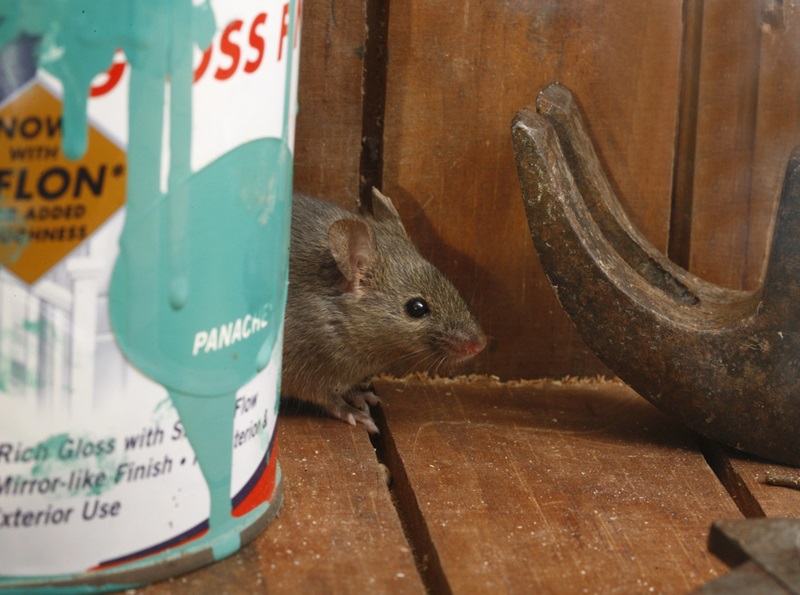
You see one mouse skitter behind the workbench, and you do what everyone does. You drive to the hardware store, stand in front of the wall of traps, and start comparing.
That’s the moment you’ve already lost a fortnight.
Here’s the part the trap packaging won’t tell you. The single biggest factor in clearing mice from a shed fast is not which trap you buy. It’s how many you set, where you put them, and whether there’s a split bag of seed in the corner quietly out-competing your bait. The trap is the easy decision. It’s also the least important one.
Let me explain why, and then I’ll tell you exactly what to do this week.
One Mouse Is a Head Start, Not a Problem
A mouse you can see in daylight is a mouse that has run out of room to hide. That usually means there are more. A lot more, fast. A single female house mouse can raise as many as five to ten litters a year, each with around five to six young, and she can fall pregnant again within a day of giving birth. Indoors, where a shed stays warm and dry, that cycle doesn’t pause for winter.
So the goal isn’t to catch a mouse. It’s to knock the population down faster than it can breed back. That changes your whole approach. Two traps by the roller door are not a plan. It’s a hobby.
The Trap Tier List, Ranked by What Actually Works in a Shed
Strip away the marketing, and there are really five options. Here’s the honest order.
- Snap traps the workhorse. Cheap, fast, and when they’re a decent quality, they kill instantly. Buy them by the dozen, not the pair. This is what does the heavy lifting.
- Electronic zappers clean and effective, but priced per unit. Great for a tidy office shed with low numbers. Too expensive to deploy in the dozen you actually need for an infestation.
- Live-catch fine for a one-off, useless for a real problem. A relocated mouse generally dies of stress or exposure, or simply finds its way back. Humane in theory, futile at scale.
- Bait stations and poison work, with real downsides. Secondary poisoning is a genuine risk to pets, working dogs, and the owls and snakes doing free pest control on your property. And a poisoned mouse dies in the wall cavity. In a sealed steel shed in summer, you will smell that decision for a week.
- Glue and sticky traps skip them. They’re inhumane, and they don’t reduce a population so much as catch the occasional unlucky straggler. There’s also a legal catch most people don’t know about.
That legal catch is worth a paragraph. Glue traps are prohibited for sale and use in Victoria, including by professional operators, and banned outright in the ACT and restricted to commercial operators in Tasmania, while remaining unregulated in Queensland, NSW, SA, WA and the NT. So you can still buy them off a Brisbane shelf, but the RSPCA’s position is that they’re unnecessarily cruel and that more humane and more effective alternatives exist. The thing on the shelf isn’t the thing that works.
Bait Is Psychology, Not a Buffet
Forget the cartoon block of cheese. Mice are seed and grain eaters, and they’re suspicious of anything new in their environment.
Two things matter
First, the bait. A small smear of peanut butter with a few rolled oats or birdseed pressed into it works far better than a loose lump of anything, because the mouse has to tug at it, which springs the trap. Chocolate spread does the same job. Use a dab, not a dollop. Loose food just gets carried off.
Second, and this is the trick almost nobody uses: pre-bait. Set your traps out baited but not armed for two or three nights. The mice learn that the traps are a safe, reliable feed station. On the night you finally set them, you clear the lot in one hit instead of catching the bold one and spooking the rest.
I watched this play out on a mate’s machinery shed near Gatton. He’d run two traps for three weeks, caught one mouse, and decided the job was done. Then the ceiling started moving at night. We counted properly, put down a dozen traps along the back wall, pre-baited for two nights, and armed them on the third. Fourteen mice by the weekend. The two traps were never the problem. The plan was.
Where You Put the Trap Beats What the Trap Is
Mice don’t wander across an open floor. They’re cautious, and they travel the edges, hugging walls and following the same routes until they leave greasy little smudge lines along the timber and the cladding. Find those runways, and you’ve found your trap placement.
Set traps flush against the wall, with the trigger end pointing into the wall so the mouse runs over it on its natural path. Space them every couple of metres along an active run, not scattered, hopefully in the middle of the floor. On that Gatton job, the productive traps were all within a hand’s width of a wall stud with a grease mark on it. The ones I’d placed out in the open caught nothing. Ten traps placed right will outperform two placed wrong, every time.
The Trap Is the Mop. Find the Leak.
Here’s the uncomfortable truth that ties it together. Trapping is mopping the floor. If you don’t find the leak, you mop forever.
The leak is two things: a food source and a way in. The food is usually obvious once you look a split bag of chook pellets, an open bin of birdseed, spilled pet food, a bag of fertiliser. Get all of it into sealed metal or hard-plastic bins. You are not trying to out-bait your own shed.
The way in is less obvious, because a mouse fits through a gap about the width of a pen, roughly 5 to 7 millimetres. Gaps under roller doors, around conduit penetrations, and at the base of the wall sheets. Trap the shed clean and then close those gaps, or the scent trails simply lead the next wave in to start over. Sealing the shed is the actual fix; the traps just buy you the clean slate to do it on.
And there’s a point where trapping stops being the right tool at all. If you’re clearing mice week after week, if they’re nesting in wall cavities or insulation, or if you’re in a humid South-East Queensland shed where the breeding never really slows, you’re past a DIY job. A licensed operator like SWAT Pest Control Brisbane will find the harbourage and the entry points you’ll walk straight past, and treat the colony rather than the stragglers. Knowing when to make that call is part of doing the job properly.
The same goes if you’re in Adelaide. Sheds here run humid over summer and mice move into wall cavities and insulation just as readily as they do further north. If you’re past the DIY stage, professional pest control services in Adelaide will find the harbourage and entry points a trap can’t, and treat the colony instead of chasing stragglers.
So buy the cheap snap traps. Bait them with peanut butter, place them against the wall, and flood the problem instead of poking at it. But understand that the win isn’t the body count this week. The win is the boring stuff, the sealed feed bin and the sealed gap, which means next autumn, you’re not standing in front of that wall of traps again.
A shed that earns its keep shouldn’t be feeding anything that isn’t paying rent.