Why Your Loading Ramp’s Weight Rating Isn’t the Number That Matters
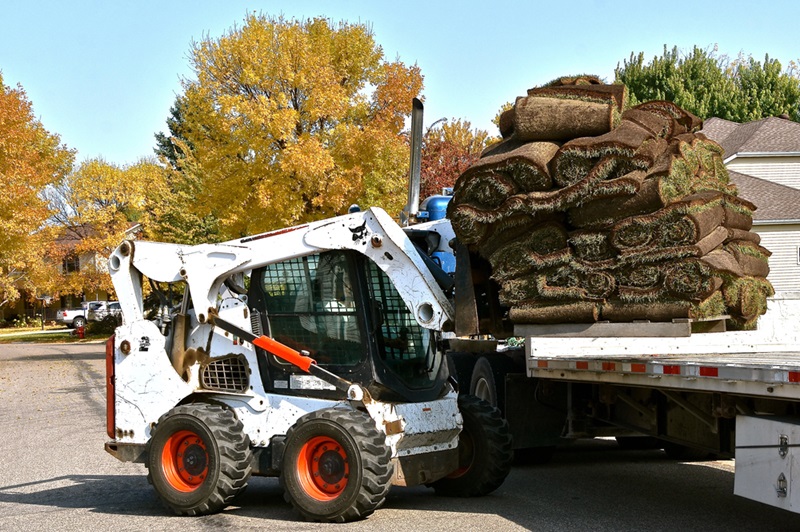
The skid steer weighed 3.2 tonnes. The ramps were rated to five. The bloke loading it did the maths in his head, decided he had nearly two tonnes of margin, and drove up. About halfway, one ramp folded.
Nobody got hurt that day, which is mostly luck. The machine came down on its side off the edge of the trailer, and the repair bill ran into five figures. And here’s the part that catches people out: the ramp didn’t fail because the weight was too high. On paper, it had plenty in hand.
It failed because of how that weight arrived.
This is the thing about loading ramps that almost nobody explains properly. Everyone checks the same number. Machine weighs X, ramp is rated to Y, Y is bigger than X, job done. That single comparison feels like due diligence. It isn’t. The rating on the ramp is the least interesting number in the whole exercise, and treating it as a simple “will it hold or won’t it” is how good gear ends up bent.
Let me walk through what actually decides whether a ramp survives the load.
The number on the box might be for two ramps, not one
Start with the trap that costs people the most. Loading ramps are usually sold and rated as a pair, and that rating is almost always the combined capacity. A “five tonne” set of ramps is typically 5,000 kg across the pair, which is 2,500 kg per ramp.
Now picture loading something with most of its mass over one wheel track, or a machine that lands heavier on one side as it crests the trailer. Suddenly, that “five-tonne” rating you were comparing against your 3.2-tonne skid steer is doing a lot less work than you assumed, because one ramp is carrying far more than half the load at the worst moment.
Read the rating, then halve it in your head, then ask whether the heaviest single side of your machine fits inside that number. If the spec sheet doesn’t make per-pair versus per-ramp crystal clear, that’s your cue to ring the manufacturer before you buy, not after you’ve bent something.
A rating is a guaranteed envelope, not a cliff edge
Here’s the mental model that fixes most of this. A ramp’s rated capacity works like the load limit on a bridge. It isn’t the weight at which the bridge collapses. It’s the weight the engineers guarantee it will carry safely, with a margin built in for the real world. You don’t treat a bridge limit as a dare, and you don’t treat a ramp rating as one either.
That built-in margin, the safety factor, exists for a reason: loading is not a static event. A machine parked on a ramp is one thing. A machine driving up one, weight shifting, tracks or tyres biting, a bit of throttle and the occasional jolt, is a moving load that spikes well above the machine’s resting weight. It’s exactly the kind of work Australian safety regulators flag as high-risk, and the safety factor is what absorbs those spikes.
Which means the margin is already spoken for. It is not spare capacity you get to spend by loading something heavier. The moment you start eating into it, you’ve removed the buffer the engineers put there to keep you alive on a bad day.
The heaviest axle is the real test, not the total
Gross machine weight is the figure on the brochure. It’s rarely the figure that matters at the point of contact.
Most machinery doesn’t distribute its weight evenly. A loader carries the bulk over the front. A mini excavator concentrates mass over its tracks and shifts it dramatically as the boom swings. A car trailer with a vehicle on it loads hardest where the engine sits. The ramp doesn’t feel the total weight as a tidy average. It feels the heaviest concentrated load passing over a single point, often right at the join where the ramp meets the trailer.
So the question isn’t “how much does the whole thing weigh?” It’s “what is the most weight that will ever sit on one ramp, at one point, at the worst moment of the climb.” Match your ramp to that, and the gross weight takes care of itself.
A ramp can be strong enough and still be the wrong ramp
This one surprises people. You can buy a ramp that comfortably holds the weight and still have a bad time, because strength and length are two different problems.
A short ramp makes a steep angle. A steep angle does two things, both bad. It robs low-slung machines of ground clearance, so the belly or the deck catches and grinds on the ramp at the transition. And it turns the loading into a pivot, where forward momentum wants to lift and tip rather than roll cleanly up.
I’ve watched a ride-on mower deck out on a too-short ramp, the cutting deck gouging the rungs while the front wheels clawed for grip and the back end started to come around. Strong ramp. Wrong ramp. The fix wasn’t more capacity, it was more length, which flattens the angle and lets the machine track up in a straight, controlled line.
If you load anything low to the ground, a long-haul excavator, a slammed car, or a mower, length and breakover clearance matter as much as the tonnage rating. Sometimes more.
Match the ramp to the machine, not just the maths
Once you’ve sorted capacity, dynamics, axle load and length, the last job is matching the ramp type to what you actually load. This is where most buyers either overspend or buy something that fights them every time.
| What you’re loading | What the ramp needs to do |
| Wheeled machinery, cars, utes | Grippy surface, generous length for low clearance |
| Tracked machines (excavators, skid steers) | A track-style profile and rungs built for steel tracks |
| ATVs, quads, small gear | Light enough for one person to set up and stow |
| Ride-on mowers | Low approach angle so the deck clears |
| Anything unusual | A custom build sized to the exact machine |
This is the point where a real range earns its keep. A maker like SureWeld runs separate series for exactly these jobs, rubber-faced, track-type, ATV, mower and custom, across more than thirty models, all Australian-made aluminium, so they’re light enough to actually use. If you’re unsure where your machine lands, work through the options and the ramp calculator on the SureWeld Loading Ramps page rather than guessing against a single capacity figure. Forty years of building these things means the answer to “which one for my gear” already exists; you just have to ask the right question, and now you know it isn’t “how much does it weigh.”
A ramp is the cheapest item in the whole operation. It’s also the only thing standing between a six-figure machine and the concrete. Stop buying it on one number, and start buying it like you understand that.