From Blueprint to Backyard: Why You Need a 3D Architectural Visualization Service for Your Custom Shed Design

A custom shed is no longer just a small box for garden tools. Many homeowners now plan premium workshops, oversized garages, pool houses, studios, and backyard hobby spaces that function almost like small buildings. The problem starts when the whole idea lives only on a flat plan. Lines, numbers, and elevations may be accurate, but they rarely show how the structure will feel beside a patio, fence, tree line, or main house. That is why many owners now review 3d rendering services before approving a large backyard build. A 3d architectural visualization service gives the project physical presence before construction begins, so the owner can judge scale, height, volume, and proportion with far more confidence.
The Spatial Illusion: Overcoming the Limitations of Flat Sketches
Understanding Real-World Scale With a 3D Architectural Visualization Service
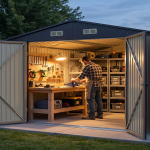
Scale is the first thing a 2D drawing can distort. A 24-by-30-foot workshop may look tidy on paper, especially when it sits inside a neat rectangle with a few dimension lines. But in the yard, that same footprint can dominate the space. Or the opposite can happen: the owner expects a generous work area, only to realize there is barely enough room for a truck, a mower, storage racks, and a workbench. Accurate 3D modeling reduces that guesswork. It can place the shed beside a human figure, a parked vehicle, shelving, doors, and equipment. The result is not just prettier than a plan. It is easier to understand because the eye reads depth, height, and clearance naturally.
Integrating the Structure Into Your Existing Landscape
A backyard structure has to live with everything already on the property. That includes the house, garden beds, fences, mature trees, pathways, slopes, and the open areas people use every week. A good render shows whether the roof pitch matches the home, whether the siding feels too heavy, and whether a dark color will make the building look larger than it is. The outdoor storage market shows why this matters. Freedonia Group forecasts that US outdoor storage demand will grow 5.3% annually to reach $3.0 billion in 2029, while noting rising interest in sheds used as offices, workshops, gyms, studios, and retreats. When these buildings become lifestyle spaces, visual fit is no small detail. It shapes how the whole yard feels.
Preventing Backyard Blunders: Lighting and Obstructions
Analyzing Sun Position and Shadow Patterns
Large backyard buildings change the light. That sounds obvious, but many owners only notice it after the walls are up. A workshop placed on the wrong side of the lot may shade a vegetable bed in spring, cool a patio in the evening, or leave a pool area darker than expected. Digital sun studies can test these effects before the concrete base is poured. By using location, orientation, and seasonal sun angles, the model can show how shadows move across the property during the morning, afternoon, and late day. This is especially useful when the shed is tall, has a steep roof, or sits close to high-use areas. Good planning protects the building and the yard around it.
Protecting Views and Managing Spatial Blockages
A large garage or workshop can also block views. The issue may be a kitchen window that once faced a garden, a living room that looked out on an old oak, or a patio sightline that suddenly ends at a wall. Flat plans show placement, but they do not always reveal how the eye moves through space. With architectural rendering services, designers can test several orientations and camera angles from the places where people actually stand or sit. The model can show whether a lower roofline, a shifted doorway, a rotated footprint, or a different placement would preserve the best view. This kind of check is simple in 3D but becomes expensive once framing starts. It is also one reason visual planning belongs early in the design process.
The Practical Benefits of Investing in 3D Modeling Prior to Construction
Streamlining Communication and Material Selection
A custom shed project usually involves several people who see the project differently. The homeowner thinks about use and appearance. The designer thinks about form, code, and proportion. The builder thinks about framing, materials, sequencing, and cost. Clear visual data gives everyone the same reference point. Instead of debating whether cedar siding feels warmer than metal panels, the client can review both options on the actual backyard model. The same applies to roof shingles, trim colors, window sizes, door placement, skylights, and exterior lighting. Research on BIM case studies published by Springer Nature reported average reductions of 20% in project timelines, 15% in costs, 30% in design errors, and 25% in RFIs. A shed is smaller than a commercial building, but the lesson still holds: clearer design information reduces confusion.
Accelerating HOA and Local Permit Approvals
Local approval can be harder than homeowners expect. A large backyard structure may trigger questions about setbacks, height, drainage, exterior materials, roof shape, and neighborhood appearance. Some HOA committees are especially cautious because they want proof that the new structure will not look temporary or oversized. A photorealistic render helps explain the design at a glance. It can sit beside technical drawings and show the finished building from the street, the backyard, and neighboring sightlines. NAR reports that 97% of its members believe curb appeal is important in attracting a buyer, underscoring how seriously exterior presentation is taken. A polished visual package makes the proposal easier to review and harder to misunderstand.

Key Elements Included in a Professional 3D Shed Rendering
The Core Components of a High-Quality Visualization
Not all 3d renderings services deliver the same level of practical detail. Some images show only a clean exterior from a single flattering angle. That can help with mood, but it is not enough for a build-ready decision. A professional model should answer real questions: how the shed sits on the land, how the interior works, what the materials look like in natural light, and how the building affects the rest of the yard. A reliable 3d render company should also understand that sheds, garages, and workshops are not just decorative objects. They are working spaces. The render should make the project easier to price, discuss, approve, and build.
Technical Breakdown List
- Photorealistic material textures that accurately mimic wood grain, metal siding, and asphalt shingles.
- True-to-scale environmental lighting that recreates specific times of day and seasonal sun angles.
- Accurate surrounding topography, including existing trees, fences, slopes, and the main residential building.
- Interior spatial layouts showing how large equipment, vehicles, or workbenches fit inside the workshop dimensions.
- Multi-angle camera perspectives and bird’s-eye views of the entire property layout.
Conclusion
Moving from blueprint to backyard reality takes more than correct measurements. It takes spatial confidence. A homeowner needs to know that the custom shed will fit the land, serve its purpose, protect natural light, preserve important views, and look like it belongs beside the main house. That is where architectural rendering services become practical rather than decorative. They turn abstract drawings into clear decisions before money is spent on materials, labor, and foundations. Construction rework is often estimated at 1% to 20% of total project cost, with many studies clustering around 4% to 10%, so avoiding late changes matters. A thoughtful 3D architectural visualization service gives the owner time to identify problems early, compare options more effectively, and build the right structure the first time.