Building a Shed in Perth? The Trades You’ll Need and How to Hire Them

A shed sounds like a simple build. Four walls, a roof, a door, done. Anyone who has actually put one up knows the reality is a little more involved, especially if you want a structure that lasts decades, keeps the weather out and does everything you need it to. Whether you are planning a basic garden store, a serious workshop or a powered studio out the back, a good shed build usually involves more than one trade, and getting the right people in the right order makes all the difference.
If you are building a shed in Perth, this guide walks through the trades you are likely to need, what each one does, and how to find and hire reliable local tradies so the project runs smoothly from slab to ridge.
Start with the groundwork: planning and approvals
Before any trade lifts a tool, work out whether your shed needs approval. In Western Australia, requirements depend on the size of the structure, its location on the block, its proximity to boundaries and your local council’s rules, so the answer can differ between, say, the City of Stirling and the City of Wanneroo. Smaller sheds may be exempt, while larger or habitable structures generally require a building permit, and sometimes planning approval, issued through your local government and assessed against the National Construction Code.
It pays to check with your local council early, because discovering you needed approval after the slab is poured is an expensive lesson. Many shed suppliers and builders will help with this process, but the responsibility ultimately sits with you as the owner. Sorting the paperwork first keeps the whole project on solid legal footing.
The concreter
For most sheds, everything starts with the slab. A level, properly engineered concrete slab is the foundation that the entire structure depends on, and it is not the place to economise. A poor slab leads to doors that will not close, walls that are out of square and water pooling where you do not want it.
A concreter will prepare the ground, set the formwork, lay reinforcement, pour the slab and finish the surface. For a shed, the slab usually needs to be designed to suit both the structure above it and the soil conditions on your block. Much of the Perth metropolitan area sits on the sandy soils of the Swan Coastal Plain, which behave very differently from clay and call for a slab designed to suit. A good local concreter will know these conditions and pour accordingly. This is one of the most important trades on the job, so choose carefully.
The shed builder or installer
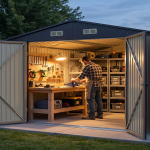
The shed itself, the steel frame and cladding, is typically erected either by the supplier’s installation team or by an independent shed builder. Kit sheds are designed to go together in a defined sequence, and while a capable DIYer can manage a small one, larger sheds and workshops benefit enormously from experienced installers who do this every day.
A professional installer will ensure the frame is square, the bracing is correct, the cladding is properly fixed and the whole structure is anchored to the slab to handle the wind loads required under Australian Standards, which matters across Perth’s exposed coastal and outer suburbs. They will also flash and seal the build so it stays watertight. Rushing this stage, or trusting it to someone learning on the job, is how sheds end up leaking or rattling in the first big storm off the coast.
The electrician
The moment you want power, lighting, a workshop bench or any kind of appliance in your shed, you need a licensed electrician. This is not optional and not a DIY job. In Western Australia, electrical work must be carried out by an electrician licensed through Building and Energy, and connecting power to a detached shed involves either tying into your home’s supply or installing a dedicated circuit, all of which must comply with the wiring rules.
An electrician will handle the cabling, install power points, lighting and any switchboard the shed requires, and certify the work. If you are planning a serious workshop, talk to them early about your power needs, because three phase power, extra circuits or higher capacity wiring are far easier to plan for before the walls are clad than to retrofit afterward.
The plumber
Not every shed needs plumbing, but plenty do. If you are adding a sink, a toilet, a wash bay or a rainwater connection, you will need a licensed plumber, regulated in WA through the Plumbers Licensing Board. As with electrical work, this is controlled for good reason, and a proper installation protects you from leaks and water damage down the track.
A plumber can also advise on drainage around the shed, which is worth considering even if the building itself has no water connection. Getting stormwater away from the slab and the surrounding area keeps the structure sound and the floor dry, particularly through Perth’s heavy winter downpours.
Other trades you might need
Depending on your plans, a few more trades may come into play. A carpenter is useful for fitting out the interior, building benches, mezzanines, shelving or lining the walls. An earthmoving or excavation contractor may be needed to level a sloping site or clear the area before the slab goes down. And if you are turning the shed into a studio, gym or granny flat, you may also want a plasterer, an insulation installer or a painter to make the space comfortable and finished.
The key is to map out the full scope before you start so you know which trades you need and roughly when each one comes in. Sequencing matters. The concreter comes before the shed installer, the electrician and plumber usually rough in before any internal lining, and the finishing trades come last.
How to find reliable tradies in Perth
The trades determine how the project turns out, so finding good ones is worth the effort. Start with word of mouth. Ask neighbours, friends and anyone you know who has recently built a shed or done similar work. A recommendation from someone who is happy with the result is the strongest lead you can get.
When you need to widen the net, an online directory is the quickest way to find local options. A Perth tradie directory lets you search by trade and suburb, then compare local concreters, electricians, plumbers and builders and read reviews from past customers before you make contact. Lining up two or three quotes per trade gives you a proper basis for comparison rather than committing to the first name you find.
Vetting before you hire
Once you have a shortlist, check the essentials before signing anything. Confirm that each trade holds the licences their work requires, particularly the electrician and plumber, and verify those licences with Building and Energy or the Plumbers Licensing Board as appropriate. Check that they carry public liability insurance, and ask to see current certificates.
Ask to see recent work similar to your project, and call a couple of past clients. The most useful questions are about reliability rather than the finished look. Did they turn up when they said they would, did they communicate well, did the final cost match the quote, and would the client use them again? Those answers reveal far more than a glossy photo.
When the quotes come in, read them carefully. Look for a clear breakdown of labour and materials, check that the quote references your specific job, and be cautious of any price that is dramatically lower than the others, because it usually means something has been left out. Get the agreed scope, price and timeline in writing before work starts, and confirm any variations in writing as they come up. If a dispute does arise that you cannot resolve, Consumer Protection WA is the body that handles building service complaints.
Choosing the right shed before you build
Before lining up trades, it pays to be clear about what you actually want the shed to do, because the intended use drives almost every decision that follows. A shed meant purely for storing garden tools and a mower has very different requirements from a working workshop, a home gym or a studio you plan to spend real time in. Getting the brief right at the start saves expensive changes later.
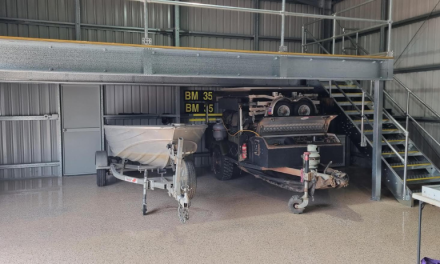
Think about size honestly, and then consider going a little larger, because almost everyone underestimates how quickly a shed fills up. Consider the height too, especially if you plan to install shelving, a hoist or a mezzanine, or if you want to store a caravan or boat. Think about access, including the width and type of doors, since a roller door suits vehicles while a personal access door is handy for everyday use. And consider how the shed will look against the house and whether your council or estate has any appearance requirements, which are common in newer Perth estates.
Budgeting for your shed build
One of the most common surprises in a shed project is the gap between the price of the shed kit and the total cost of the finished, usable structure. The kit is only one line in the budget. The slab, the site preparation, the installation, the electrical and any plumbing all add up, and leaving them out of your early planning is how budgets blow out.
A realistic budget accounts for several elements. There is the shed itself, the concrete slab and any earthworks needed to level the site, the installation labour if you are not erecting it yourself, the electrical work if you want power and lighting, and any plumbing, lining, insulation or fit out you have in mind. There are also the less obvious costs, such as council fees if approval is required, and connection charges for running services to a detached structure. Building in a contingency of around ten to fifteen per cent is wise, because sites throw up surprises, particularly below ground where conditions are hard to predict.
Timing and sequencing the trades
A smooth shed build depends on the trades arriving in the right order, and a little planning here prevents costly hold ups. The sequence generally runs from the ground up. First the site is cleared and levelled, then the slab is poured and given time to cure properly before anything is built on it. Rushing the slab cure to keep the schedule moving is a false economy that can compromise the whole structure.
Once the slab is ready, the shed frame and cladding go up. The electrician and plumber typically rough in their services at the appropriate stage, before any internal lining is fixed, because retrofitting cabling or pipework into a finished interior is far more disruptive and expensive. Finishing trades such as plasterers, insulators and painters come last. Coordinating all this is easier if you book your key trades in advance, especially in a busy market where good operators are in demand.
Build it once, build it right
A well built shed is one of the most useful additions you can make to a Perth property, whether it is a workshop, storage, a studio or a retreat from the house. The difference between a shed that serves you for decades and one that becomes a headache almost always comes down to the groundwork and the people who build it.
Plan the scope, sort your approvals, line up the right trades in the right order, and check their credentials before you hire. Do that and your shed build will go up smoothly, stand up to whatever the weather throws at it, and do exactly what you wanted from the day the last screw goes in.