Your Shed Isn’t a Black Hole: Smart Ways to Handle the Overflow
You open the shed door, reach for the mower, and instead end up in a wrestling match with a folded gazebo, three half-empty paint tins and a box of cables you’ve been meaning to sort since 2019. Sound familiar? Sheds have a way of quietly swallowing everything until they stop being useful. The good news is the fix isn’t a guilt-ridden weekend of throwing things out — it’s a few smart moves that get your space working again and keep it that way.
When the Shed Genuinely Isn’t Enough
Sometimes you’ve sorted, shelved and sealed, and the shed is still bursting. At that point you’ve got two real options: build bigger, or store elsewhere. A shed extension means cost, council approval and time — worth it if you genuinely need more permanent workspace, less so if you just need somewhere to park boxes for six months.
That’s where off-site storage earns its keep. It’s flexible, secure, and you only pay for what you use. If you’re weighing it up, it’s worth finding self-storage near you to compare what’s available locally. Off-season gear, valuables, business stock, important documents and anything that doesn’t cope well in a hot, damp shed are all far better off in a controlled storage unit than crammed into a corner.
How Sheds Quietly Fill Up
The “I’ll deal with it later” pile
Most shed clutter isn’t really clutter when it goes in. It’s the camping gear after a trip, the offcuts from a project you might finish, the stuff that has nowhere else to live. Each item seems reasonable on its own. Stack a few years of those decisions on top of each other and the floor disappears.
When storage becomes stacking
There’s a tipping point where a shed stops storing and starts hoarding. You can tell you’ve hit it when you can’t reach the back wall, can’t find a tool without moving five other things, and start leaving gear outside because it’s easier. That’s the signal it’s time to act.
Step One: Sort Before You Solve
The four-pile method
Before buying shelving or renting space, sort. Pull everything out and split it into four piles: keep, sell, bin, and relocate. Work quickly and don’t overthink each item — momentum is your friend here. A cluttered shed almost always shrinks by a third once you’re honest about what’s actually in there.
Be honest about what earns its spot
The simplest test is frequency. If you’ve used it in the last year, it earns a place. If you haven’t, ask why it’s taking up prime real estate. Sentimental items are fair enough — just don’t let “sentimental” quietly become a category for everything you can’t be bothered deciding on.
Make the Space You Already Have Work Harder
Go vertical
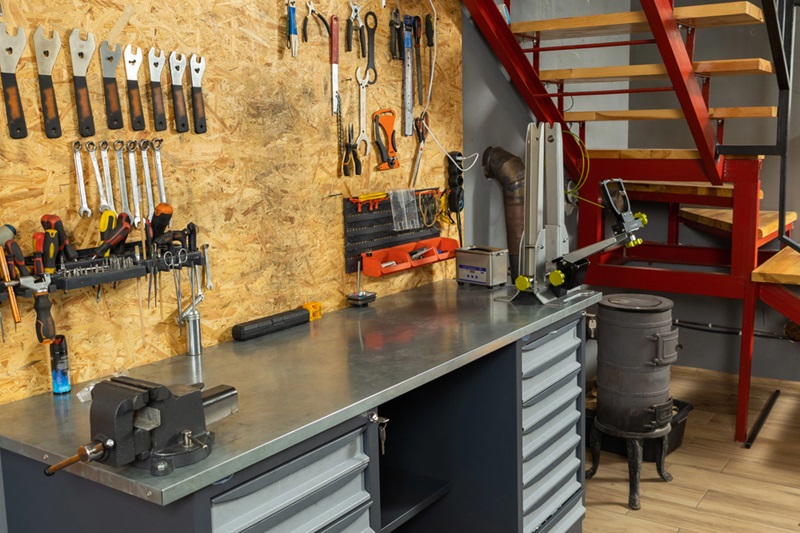
Most sheds waste their best storage: the walls and the air above your head. Wall-mounted brackets, sturdy shelving and a row of hooks can clear half your floor in an afternoon. Get long tools, hoses and seasonal gear up off the ground and suddenly the space feels twice the size.
Add a mezzanine for the big wins
If your shed has the height, a mezzanine floor is the single biggest space upgrade you can make — effectively doubling your storage footprint without extending the footprint itself. It’s a bigger job, but for a shed that’s permanently overflowing, it pays for itself in usable space.
Keep the damp and vermin out
Whatever you store, protect it. A poorly sealed shed lets in moisture, dust and the odd rodent, and there’s no point reorganising gear that’s quietly rusting or being chewed. A bit of vermin proofing and insulation goes a long way to keeping your sorted shed worth the effort.
Keeping the Overflow From Coming Back
A simple seasonal reset
Clearing the shed once is satisfying. Keeping it clear is the real win. A twice-a-year reset — once before summer, once before winter — takes an hour and stops the slow creep before it gets out of hand.
One in, one out
The other habit worth adopting is brutally simple: when something new goes into the shed, something old comes out. It’s the easiest way to stop the black hole reforming.
A shed works best as a working space, not a dumping ground. Sort it honestly, store smarter with shelving and a mezzanine, seal it properly, and send the genuine overflow off-site — do that, and you’ll open the door to a mower you can actually reach.