Warehousing vs Commercial Shed: Which Is Right for Your Business?
There are countless aspects to consider when running a business. Profit margins, stock inventory, sales, marketing, hiring security guards, managing your team and much more. While being in business can be ultimately profitable, it takes a series of good business decisions about how you allocate your finances and investments to get there. One major decision you might need to make for your business is whether to invest in warehousing, a commercial shed or multiple sheds to manage your inventory and distribution. Below, we’ll explore the benefits and drawbacks of each option, helping you make a fully informed decision that gives your business the best chance of success while offering the capabilities you need.
What is Warehousing Suitable for?
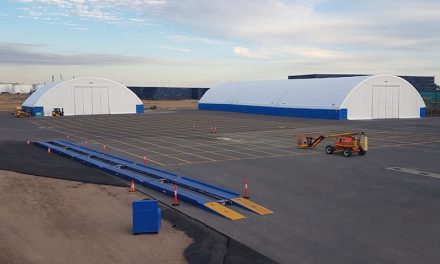
Warehousing is often the first option that comes to mind for business owners who need to handle large volumes of stock or manage large-scale logistics. A warehouse is typically a large, purpose-built facility designed for the storage, management and distribution of goods. These buildings are commonly located within industrial zones in cities and are often close to major transport routes, making them ideal for companies that rely heavily on shipping and freight to fulfil orders.
One of the biggest advantages of warehousing is sheer capacity. Warehouses are designed to store large quantities of goods efficiently, often with high ceilings, racking systems and specialised loading docks that make receiving and dispatching stock easier. Businesses that operate in the e-commerce, wholesale distribution or manufacturing spaces frequently benefit from this kind of infrastructure.
However, warehouses can come with higher costs for the business. Leasing or purchasing a warehouse space, especially in a well-connected industrial area, can require a significant financial investment. On top of this cost outlay, businesses may also need to invest in warehousing equipment, like forklifts, shelving systems and warehouse management technology. For smaller businesses or startups, these costs may be difficult to justify in the early stages of growth and scaling.
The Appeal of Commercial Sheds for Business
Commercial sheds, on the other hand, offer a more flexible and often more affordable alternative for a business. These structures are typically simpler in design and can be easily customised to suit a range of business purposes. Many businesses use commercial sheds for purposes like storage, workshops, vehicle housing or light manufacturing.
One of the major benefits of a commercial shed over a warehouse is cost-effectiveness. Compared with large warehouses, sheds are generally cheaper to build, purchase, rent and install your fitout within. They can also be constructed on existing business property, which removes the need to lease an entirely separate facility. For many small- to medium-sized businesses, this can make commercial sheds a practical and attractive option.
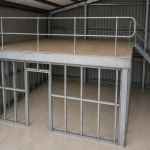
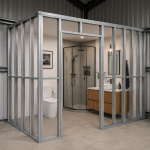
Another advantage here is versatility. Commercial sheds can be easily designed to meet a business’s exact needs. Maybe your firm needs additional storage, a workspace for equipment or a place to manage smaller amounts of inventory. Commercial sheds can often be tailor-made with features like electrics, roller doors, insulation, ventilation and internal partitions to suit a wide range of needs.
Sensitivities and Security Needs
When deciding between a warehouse and a commercial shed, consider what you’re storing and how sensitive it is. High-value stock or items requiring strict access control may benefit from a warehouse, often equipped with advanced security systems and the option to employ on-site security guards. If your business doesn’t handle valuables or sensitive materials, a commercial shed can provide adequate protection at a fraction of the cost. This approach lets you invest more in growing your business while still maintaining secure, functional storage.
Consider the Size and Volume of Your Business’s Goods
Choosing between warehousing and commercial sheds will ultimately come down to the exact nature of your business operations. If your business handles a high volume of goods and requires frequent logistics and distribution, a warehouse will provide the scale and functionality needed for your outfit to operate efficiently. Warehouses are particularly well-suited to businesses that require organised storage systems and regular access to freight for smooth operations.
Alternatively, if your business only needs a more modest storage solution or a multipurpose workspace for various operations, a commercial shed may be the better fit here. Sheds are often ideal for trade businesses, service businesses, equipment storage and companies that want to expand their available space without committing to the eye-watering expense of a full-scale warehouse facility.
It is also worth considering future growth here. Businesses expecting rapid expansion and growth may benefit from the infrastructure and inherent scalability that a warehouse provides. On the other hand, companies in the early stages of development may prefer the flexibility that starting with a commercial shed provides and consider upgrading later as their operational requirements increase.
Hybrid Options and Location Considerations
In some cases, businesses find that a hybrid approach works best, combining smaller commercial sheds with leased warehouse space. This can provide flexibility to manage seasonal fluctuations in stock, store specialised equipment or accommodate workshops and processing areas, without the full commitment of a large warehouse lease. Considering location is equally important.
Warehouses are often situated near transport hubs, major highways and logistics corridors, which reduces shipping costs and delivery times. Commercial sheds, on the other hand, can often be built closer to your primary business site, keeping operations centralised and reducing the need for staff to travel between locations. Assessing both your operational workflow and your team’s daily needs will help determine whether proximity or scale is the higher priority. By weighing these factors, business owners can make a strategic choice that balances convenience, cost and functionality.
Key Takeaways
Both warehousing and commercial sheds offer valuable benefits depending on how your business operates. Warehouses provide scale, structure and advanced logistics capabilities, making them suitable for businesses with large inventories and complex distribution networks. Commercial sheds, in contrast, offer affordability, flexibility and customisation, making them perfect for smaller operations or specialised workspaces.
Before making a final decision here, it is important to assess the business’s storage requirements, operational workflow and your long-term goals. Taking the time to evaluate these factors can help you ensure that the space you invest in will support your business growth rather than limiting it. By carefully weighing the advantages and drawbacks of both warehousing and commercial sheds, you can choose a solution that aligns with your business’s current needs and future plans.