Small Block, Big Ideas: Maximising Space in Compact Floor Plans

Having a dream home built in a smaller area should not be a situation where you feel you are compromising your lifestyle in any way. In fact, small space living is the new gold rush for the need to be efficient without looking in any way tacky.
Smart layouts and a small footprint are transformed into a haven that feels unexpectedly large. It’s about flow and light, about design instead of square metres, to make a space feel like a home.
Understanding the Limitations and Opportunities of Small Blocks
In dealing with a relatively small area of land, the boundaries stretch beyond the literal definition. They are the guide for your creative expression. Generally in Australia, for small blocks in suburban areas, the limitations may be limited space in terms of the frontage of the land and possibly the proximity to adjacent properties. Both may appear to be limitations in the first place.
Orientation is your best friend at this stage. By learning how the sun moves in relation to your space, you can design a home where the natural light pours in through windows to illuminate small floor plans. Research published in the International Journal of Engineering Research & Technology underlines the fact that optimising spatial configurations.
In other words playing a high-stakes game of Tetris with your rooms, will go a long way in improving perceived comfort. These are the local planning regulations and site suitability to be navigated first to ensure your small block homes meet compliance while still capturing that elusive sense of space. It is less about what you can’t do and more about how cleverly you can do it.
Design Strategies to Maximise Space
The creation of volume in places of limited floor area has to do more with how the architectural magic tricks are created.
Open-Plan Living Areas
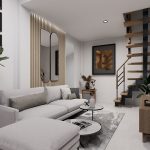
Gone are the days of old-fashioned compartmentalized rooms. Blending the three spaces into one room eliminates any useless hallways and walls. However, to avoid the space becoming a whole mess of clutter, you can separate the different sections using furniture. A rug or breakfast bar can be an effective way of separating sections without obstructing the view.
Multi-Functional Rooms
In a small home, each space must perform two jobs. Why should a guest room be empty 350 days per year? Consider a home office space where a good sofa bed or built-ins can be used. Evidence-based design approaches indicate the need for the usage of conversion space and furniture, such as sliding doors rather than swinging doors.
Vertical Space and Storage Solutions
If you cannot go up, go out. Loft shelving and floor-to-ceiling cupboards look fantastic and draw the eye upwards to the higher ceilings. Storage under the stairs is the old trick for hiding the holidays, and a built-in robe keeps clutter off the floor and furniture.
Outdoor Integration
Your living room shouldn’t have to stop at the glass door. Employ seamless floor levels and huge sliding doors, and a small courtyard or deck becomes a natural extension of your interior. You can explore a range of different residential floor plans, all designed to maximise every metre of your small block, to see how this indoor/outdoor flow creates a much larger living zone than the blueprint might suggest.
Personalisation Options for Compact Homes
Rarely does one size fit all, especially when it comes to a unique block of land. The key to personalisation is ensuring a floor plan doesn’t just look good on paper but actually supports how you live day-to-day. Sometimes, it’s those minor tweaks that can make a huge impact, like moving a doorway to create a better wall for a desk or choosing custom cabinetry to fit into a nook.
According to a research paper on Optimizing Small Spaces via ResearchGate, these little design options have a big effect on our perceptual experience of a room. For example, selecting lighter color palettes or strategically placed mirrors can push the walls back. When you look at different ways to customize a layout, you’re essentially tailoring the home to fit your life like a glove rather than trying to fit your life into some generic box.
Case Studies: Small Blocks Done Right
Let’s have a look at what these theories translate to in real-world wins.
- The Narrow Lot Masterpiece: With a frontage of only 10 metres, one design had used a central courtyard strategy. By setting a small garden in the middle of the house, all rooms were exposed to light and air and had thus made the 200-square-metre house feel like an estate.
- Two-Storey Specialist: This conceptual plan has relocated the major living areas to the upper floor to capture the distant views and cooling breezes. It utilized a void over the dining area, creating a double-height ceiling that made the compact footprint feel incredibly grand.
- The Sustainable Micro-Home: This design focused on a tiny footprint approach, minimising hallway space to almost zero. Research into Australian tiny home emissions shows that smaller builds like these are not only great for saving space but also cut down massively on greenhouse gas emissions. This, in turn, signifies that living small is great both for the homeowner and the planet.
Key Takeaways for Maximising Small Blocks
The test of designing in a small block is the biggest challenge for intentionality. It requires you to think about what is really important for you in your home. This could be natural light, flow, or that dream kitchen that you have been saving up for. With a focus on open plan living, adaptability of space, and relationship with the outdoors, you can conquer any block!
The goal is no longer how many items you can stuff into a given space, but instead how many living experiences you can get out of that space. Take a look at these different residential floor plans for your home and how nicely the land is utilised.