8 Ways to Bring Your Home into the 21st Century
Most “modernise your home” articles read like a 2018 Best Buy catalogue. Smart speaker. Wi-Fi bulb. Video doorbell. Job done.
That’s not bringing your home into this century – it’s adding gadgets to a 20th-century house. A genuinely modern home in 2026 is electrified, networked on open standards, and instrumented enough to tell you when something’s about to break or cost you money. The good news is that the technology, the standards, and the rebates have all finally caught up with the marketing.
Here are nine upgrades worth your money and attention this year – most of them recent enough that they weren’t realistic options even two years ago.
1. Light your home in layers, not in oysters
Walk through older Australian homes and you’ll find every room lit the same way – a single oyster light dead in the centre of the ceiling, throwing flat, even, hospital-grade light over everything. It’s the cheapest and worst possible lighting design.
Modern lighting is about layers: ambient (the general fill), task (kitchen benches, reading nooks, desks) and accent (artwork, plants, architectural features). A well-lit room uses three or four sources at different heights, not one source overhead.
Indoor pendant lights are the workhorse of this approach. Hung in pairs over a kitchen island, low over a dining table, or as a cluster down a stairwell void, they bring the light source down to eye and task level – where you actually need it – and let the ceiling go dark, which makes a room feel taller and more relaxed. The right pendant turns a kitchen from “lit” to “designed.”
The lighting itself has caught up too. Tunable white LEDs shift from warm 2,200K candlelight in the evening to crisp 4,000K daylight in the morning, syncing with your circadian rhythm in a way that genuinely affects sleep. Matter-compatible dimmers and bulbs from Philips Hue, Nanoleaf, Aqara and Eve let you trigger scenes – “dinner,” “movie,” “morning” – from a tap or automatically by time of day. Most existing E27 or B22 sockets accept retrofit smart bulbs, so you don’t need an electrician to start.
If you do one aesthetic upgrade this decade, replacing the central oyster in your living and dining areas with a pendant arrangement plus a couple of floor lamps will change the feel of the home more than any other single change.
2. Cook with magnets, not flames
This is the cheapest, most visible 21st-century upgrade most kitchens can make, and it’s where the Australian electrification story actually starts.
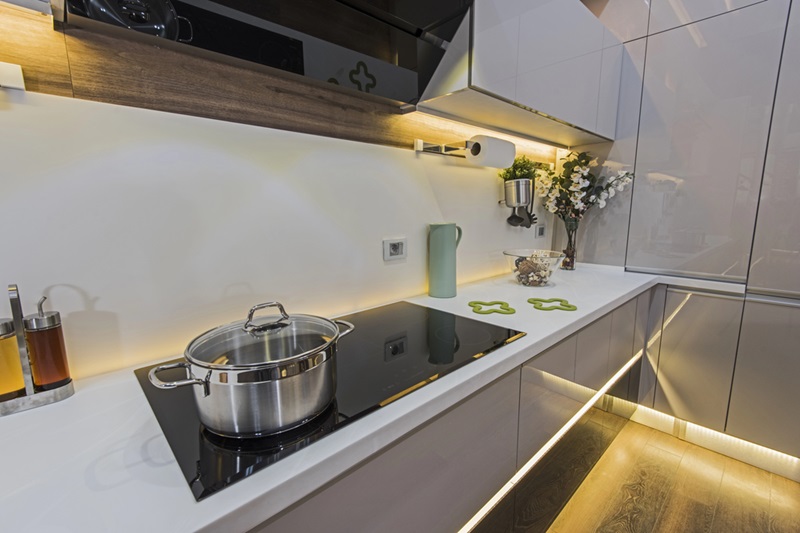
Induction cooktops use an electromagnetic field to heat the pan directly. The glass surface stays cool, water boils about 50% faster than gas, and energy efficiency sits near 90% versus about 40% for gas. The health case is just as strong – gas cooktops vent nitrogen dioxide and fine particulates straight into your kitchen, which is why Asthma Australia has been pushing hard against them.
Australian uptake has surged between 2024 and 2026 as gas prices have risen 20–30% annually. The financial case is genuinely good: Victoria’s VEU program offers around $140 off a switch from gas, and disconnecting gas entirely saves $350–$400 a year in supply charges alone. NSW and SA have similar schemes.
One catch worth budgeting for: a 90cm induction cooktop can pull 7.2–7.4kW on boost mode and needs a dedicated 32A circuit installed by a licensed electrician. If your switchboard is older than the 1990s, the cooktop won’t be the only thing that needs upgrading – which brings us to the next point.
3. Upgrade the switchboard before everything else fails
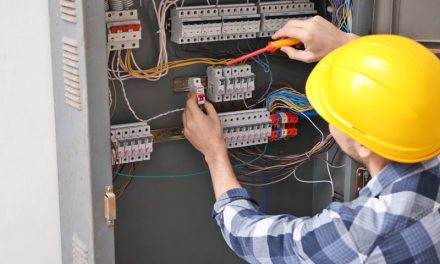
The most boring item on this list is also the most important. Your switchboard is the spine of every other upgrade you’re considering. Solar, batteries, EV chargers, induction cooktops, heat pumps – they all land here, and most Australian homes built before the 1990s aren’t ready.
Old ceramic fuses, no RCD protection, no spare circuits, and over-fused wiring are common in older Sydney terraces and Queenslanders. They’re also a leading cause of house fires, and an increasing number of insurers now require electrical safety certificates compliant with AS/NZS 3000:2018 – without one, a claim after an electrical fault can be denied.
The 2025 National Construction Code requires new homes to be electrification-ready from the outset, which is the bar to meet. When you book a sparky to upgrade, give them the full future load list: solar size, battery, EV charger amperage, heat pump, induction, and any future granny flat. Sizing once is cheaper than rewiring twice. If you want serious EV charging at 22kW or a large solar-battery system, ask about a three-phase upgrade while the boards are off the wall.
4. Turn your hot water into your cheapest bill
Hot water is 15–30% of the average Australian household’s energy bill – the single largest source of household emissions for most homes still on gas. A heat pump hot water system uses roughly a third of the energy of gas continuous flow to produce the same output, by extracting ambient heat from the air rather than burning anything.
The economics in 2026 are unusually good because federal and state rebates stack. Federal STCs deliver $800–$1,200 off depending on your climate zone and the unit’s efficiency. In Victoria, the VEU and Solar Victoria Hot Water Rebate combine for another $1,000–$1,400 on top. NSW residents can stack ESS certificates with federal STCs. A heat pump that lists at $4,000–$5,000 often lands at $1,500–$3,000 installed after rebates, and Western Sydney installers are quoting some budget systems as low as a few hundred dollars out of pocket.
Annual running cost typically drops from $800–$1,000 (electric storage or gas) to $200–$350 (heat pump). Payback is usually 2–4 years. The federal STC scheme dropped its deeming period from six years to five on 1 January 2026, so the rebate quietly shrinks each year – there is a real financial reason not to wait.
5. Take the audio out of the soundbar
For the last decade, “home audio” has quietly meant “whatever speaker came with the TV.” That’s a downgrade most people don’t notice until they hear what proper audio actually sounds like – and in 2026 you can have it in every room without a rack of gear or a wiring nightmare.
Brands like Sonos and Audio Technica still lead on polish, but WiiM, Bluesound and Denon HEOS offer lossless streaming from Spotify, Apple Music, Tidal and Qobuz at a fraction of the cost. AirPlay 2, Google Cast and the newer Matter Casting spec let you push the same track to every speaker in the house in sync, from your phone – kitchen, bathroom, deck, study.
The renovation move is in-ceiling or in-wall speakers paired with a hidden streamer or amplifier in a cupboard. Brands like Sonance, Bowers & Wilkins, KEF and Sonos disappear into the plaster, deliver genuine fidelity, and free up shelves and benchtops. Run the cabling during any reno where ceilings or walls are already open and the cost is marginal; do it after and you’ll pay three times.
For the main living room, a 5.1.2 or 7.1.4 Dolby Atmos setup with height speakers transforms film and TV – rain on a rooftop scene actually comes from above. If a full speaker array isn’t feasible, a flagship Atmos soundbar with separate wireless rears (Sonos Arc Ultra, Sennheiser Ambeo, Samsung HW-Q990) gets you most of the way there for the price of a decent fridge.
Audio is the upgrade most people skip and most regret skipping – partly because nobody ever feels their existing soundbar is “broken,” and partly because you can’t unhear properly reproduced music once you’ve heard it.
6. Make your driveway a power plant
This is the upgrade that wasn’t legally possible in Australia until very recently. AS/NZS 4777.2 Amendment 2 came into effect on 23 August 2025, finally giving the Clean Energy Council a framework to approve bidirectional EV chargers – the kit that lets your car’s battery power your house.
A typical EV holds 50–100kWh. A Tesla Powerwall holds about 13kWh. Vehicle-to-Home (V2H) charging turns the car you’ve already paid for into a battery roughly five to seven times larger than any home unit on the market – enough to run an average Australian home for three to five days through a blackout.
Honest reality check: in mid-2026 this is still early-adopter territory. CEC-approved bidirectional chargers like the V2Grid Numbat, Sigenergy and RedEarth Boomerang are real, but they cost $10,000–$20,000 installed, and only a narrow band of cars currently support V2H – Nissan Leaf, Kia EV6/EV9, Hyundai Ioniq 5/6/9, the new VW ID range, and a few others. Most popular Australian EVs, including the Tesla Model Y and BYD Seal, do not.
The smart play for now is to install your charger circuit on a sub-board capable of being upgraded later. Don’t pay the bidirectional premium today unless you own a compatible car and want backup power. Do design your switchboard and garage wiring so that you can swap to a V2H unit without ripping anything out when prices halve in 2027–2028.
7. Put a plumber in a box on your main water line
The most underrated home upgrade of the last five years has nothing to do with apps or AI. It’s a small valve plumbed onto your main water inlet that watches flow patterns, learns your household’s normal usage, alerts you on your phone the moment something looks wrong, and shuts the water off automatically before a slow leak becomes a flood.
The case is brutal in dollar terms. Whole-of-home water damage is among the costliest property insurance claims; the average sits around AU$15,000–$17,000 per event. Devices like the Phyn Plus 2nd Gen and Moen Flo detect leaks as small as a drop per minute, are recognised by major Australian and global insurers, and often qualify for premium discounts of 10–15% that pay the device off in two to three years.
For renters or homeowners not ready to plumb a main valve in, a $200–$400 set of battery wireless leak sensors under each sink, behind the washing machine, by the hot water unit and near the toilet base is the budget alternative. They won’t shut the water off, but they’ll wake you up at 2am instead of letting you find the damage at 8.
Anyone who has dealt with a hidden bathroom leak or a slow shower drip behind tiles will tell you this is the only “smart home” device that has ever directly paid for itself.
8. Measure what you’re breathing
You probably spend something like 90% of your life indoors. The EPA estimates indoor air can be two to five times more polluted than outdoor air, and during cooking, cleaning, or smoke events it can be far worse. Australians don’t need reminding about wildfire smoke. Until very recently, none of us could see any of it.
A decent indoor air quality monitor changes that. Look for one that measures PM2.5 (fine particles), CO?, total VOCs, temperature and humidity at minimum. Models like the Airthings View Plus add radon, which matters more than people realise in older homes built on certain soils. Better units use an NDIR CO? sensor and a laser particle counter rather than the cheap chemical sensors that fake half their readings.
The numbers genuinely change behaviour. Cognitive performance drops measurably at CO? levels around 1,400ppm versus 550ppm – bedrooms with closed doors and two occupants regularly hit that. PM2.5 spikes from gas cooking, candles, fireplaces and Sydney’s haze events show up the moment they happen.
Pair the monitor with Matter-compatible smart vents, ceiling fans or a kitchen rangehood on a smart plug, and the system can respond automatically: extract fan on while you cook, windows opened reminders when CO? climbs, air purifier triggered during a smoke alert. That’s the actual definition of a smart home – it observes the environment and acts on it – and it costs less to set up than a decent espresso machine.
Final thoughts
None of these upgrades are gadgets for the sake of it. Each one either takes a recurring cost off your bills (hot water, cooktop, EV charging), removes a serious risk (water, fire, air quality), or makes the rest of the upgrades possible (switchboard, Matter). They’re also the upgrades buyers will start asking about within a year or two as more states phase out new gas connections and the EV fleet grows.
Pick the two that match your house’s biggest weakness this year, plan the switchboard around the others, and you’ll be ahead of 95% of the housing stock by Christmas.